This is a more personal note than I have written before. This year I had great plans to put into action in January. What I did not realize, and could not plan for, was the sudden death of my Grandfather. It was quite a shock. While I grieved for my Grandfather, I also grieved for his wife, my Grandmother who died 4 years ago.
Then I was surprised with grief related to my chronic illness. Chronic illness/disability grief does exist and it often comes at a surprising time. I also believe that my immune system was impacted by all this grief because I got a particularly bad cold that aggravated a lot of my symptoms. I don’t mind saying that I was depressed. My plans for this month were thrown out the window.
One day I will write a more in-depth note about chronic illness/disability grief, but for now please know that this can come on very quickly for people and it can be very hard. Please make sure to check in with your friends.
The start of a new year can be very difficult for people. Be kind to yourself. Be kind to others. Remember to take small moments for yourself and that self-care is not selfish.
This instalment of the Sava Wellness Community Interview Series takes a bit of a different form than the previous iterations. In this article the owner of Sava Wellness, Sarah, talks with her good friend Dania! Being friends for many years, the two of them talked long on a video call and were able to get to the core of matters quickly and in some ways more deeply because they know each other so well. There was enough content for many articles, but the heart of their conversation is transcribed below. Please read on to learn more about Dania, her experiences with health care, her scoliosis, colitis, and hip replacement surgery.
Hi, Dania. It’s great talking with you today! Can you tell us a little bit about yourself?
Hi, I’m Dania. I live in Calgary, Alberta right now. I’m a PhD candidate, so I don’t have time for hobbies. But I read and I write a lot. I have a big family, so I spend a lot of time with them. I have a beautiful little bunny named Arlo. He’s the best.
If you have a job outside of your chronic illness and you want to share, can you please share about it. But we all know that having chronic illness or disabilities can be a full-time job in itself.
I’m an instructor. I teach asynchronously which means I teach online and the classes happen asynchronously where I post things and the students do them as they want. I teach three of those at Red Deer Polytechnic and I am a Teaching Assistant at the University of Calgary. I teach literature.
Okay, so let’s talk more now about actually chronic illness and disabilities. So, Dania, do you have a diagnosis for your symptoms?
I have a diagnosis for colitis. It took a thousand years and disagreeing doctors. I still don’t have a real treatment plan. It’s been messy.
You still don’t have a treatment plan?
Oh, I had a treatment plan and it was working but then the side effects were outweighing the benefit. I have a microscopic colitis so it’s not as easy to treat. So I think a lot of specialists, especially now when the health care system is in shambles, only treat higher risk patients who have a risk for cancer and not for all their symptoms. Lower risk patients kind of get pushed out of the specialists because there’s just no access to specialists because of the lack of them. So you end up with your family doctor who tries and puts you on something to kind of manage your symptoms. Specialists are no longer interested in lower risk patients because they just don’t have the time or resources to deal with you until you get more serious. So instead of being preventative care it becomes ‘once you’re at your last resort’ type care which is not ideal. This is what I’m finding in GI specialists and other places too. I also have scoliosis and I was having a lot of back problems. And when I went to see a specialist, which there aren’t many for adults, they said there are worsening symptoms, but I don’t want to see you until you can no longer walk. I ended up leaving that appointment and crying in my car because they were just so mean to me and there was a x-ray with my curved back on in the appointment and they tried to gaslight me into thinking I didn’t have scoliosis, like I was wasting their time. They did say “I guess if you’re having pain, I can send you to a different specialist” and ended up sending me to the hip specialist. Who was thankfully a really nice person and was like “okay, the pain in your back is from the scoliosis you shouldn’t have been pushed aside like that” and found that I also had a hip problem that was contributing to it. So I ended up getting my hip surgery but that’s kind of been my experience with healthcare. It’s just been really difficult. And I’m really lucky because I have a family doctor that cares a lot. You go in to healthcare with a concern about something that isn’t normal, especially women’s issues, and they make you feel like you are wasting their time, even when you know it isn’t normal, like never having a period. It makes you not want to go to appointments because they will just gaslight you.
I think more people need to say that because we all deal with it and we just think it happens only to us.
I worry if I push back I won’t receive any help so you just kind of sit there and deal with it. It’s horrid, right? There’s the power dynamic too of this person is a medical professional, a doctor, and you’re just at their power. They’re the ones that have all the power in any kind of helping you feel healthy situation and you just kind of sit there and you’re like “they must be right” because you know they’re the doctors. It actually was my mom that started pushing back for me to realize, hey, I don’t have to take this doctor’s rudeness and unhelpfulness. My sister is like, just go back and tell them what they need to know, and so I started like going to doctor’s appointments with a sibling.
I think it’s easier to have someone with you, and I’ve spoken about this before, I go to appointments with my Mom and it’s not because I’m a child, it is so that I have an advocate for myself and that if I do forget something she can help me.
It’s easier to stand up to someone when you’re not one-on-one and there’s not the power imbalance. It kind of feels like when there’s two of you, the power balance is almost balanced, right? Because it’s one doctor and two of you. The doctor can’t talk it down to you the same way when I have a person there to witness or stand testimony or something like that. It’s an advocacy thing and you feel safer going in with another person too, especially if you have this kind of experience of being gaslit.
So could you explain what colitis is and what scoliosis is for us?
So, colitis. This is similar to Crohn’s disease where you have an inflamed colon and it can cause ulcers and increases your risk of cancer as well. It often gets misdiagnosed or like shoved aside as IBS because the difference can only be told by doing a scope of the colon, which doctors don’t want to do now because it is too expensive. Symptoms are actually quite wide-ranging. They could be: diarrhea, constipation, blood in the stools, nausea, or night sweats. Fatigue is a big one that is difficult to deal with especially because you’re not absorbing nutrients the same. Bloody stools is the big one that will cause the doctors to do something. But there’s a lot of really uncomfortable symptoms that they’re just like, oh, it’s IBS, there’s no treatment. And so you’re like, no human is normally living like this; sometimes it is really embarrassing, but like excessive diarrhea which is not a normal adult human thing to deal with. A person in their twenties should not have to think about where all the bathrooms are in case of emergency. It’s stressful.
And does it kind of feel then like you’re trapped? Because you’re not sick enough, but you’re still dealing, and may I say suffering, with these symptoms?
Yeah, it’s exactly that. And then every time I develop a new symptom my family doctor, I’m really lucky and I know that a lot of people don’t have this, really advocates for me a lot. But, you know, it’s tough because you really feel like you’re not sick enough. But you’re still having all of these hideous symptoms and I don’t get any care because they aren’t bad enough and it feels like I just have to convince myself that I am probably fine. If you’re having a really tough day and you feel like dying, I think “I’m not that sick technically” so I can go to work, and then go and feel awful the whole time.
Would you call yourself chronically ill or disabled or something else?
No, because the system doesn’t really allow for me to have that kind of understanding, I guess just by a difference of label.
It’s interesting how much difference a label can change how you’re treated.
Yeah, and then it changes how you see yourself too. So if I’m having trouble being awake, sometimes when you get fatigued and it’s difficult to just open your eyes and then all your limbs are really heavy, and I tell myself “I’m so lazy” that there’s just like this voice in my head if I have to take a nap that I’m so lazy, you should be doing something, etc. So I think that the way that you’re labeled or the way that you’re diagnosed really changes you mentally, it allows you to give yourself a break if you have that diagnosis, but I have such a hard time doing that because I’m like, “oh, they say you’re fine.”
I think that is an even worse form of gaslighting because now they’re making you question your wellbeing and, I don’t want to say identity because I know we don’t all identify as our illness, but it kind of changes the way you think of how you function with your illness every day.
Yeah, totally.
Okay, would you mind now talking a little bit about scoliosis?
Oh yeah, so there is curvature in my spine, my spine didn’t grow straight and it’s usually something that comes up during your growth spurt. It’s actually funny, I was in Lebanon when I was like fifteen and I was wearing a bathing suit, and my mom was like, what is going on with your hips? The way scoliosis looks, is that one hip is bigger than the other. So when we got back to Canada, my doctor said that’s scoliosis and sent me to a specialist. There’s different severities, I’m in the middle—meaning it’s noticeable, but it’s not hugely dangerous. It causes pain. And it’ll cause pain while aging. There’s really no treatment for people that don’t have severe cases. Severe cases can get surgery and physio.
Now, because I know you well, how does your hip and hip surgery come into that?
I’ve had pain in my hip area and my lower back, I always thought that it was connected. And then if I was laying down on the ground, for example, I would get like stuck. My brother would have to come and pick me up. The scoliosis specialist sent me to the hip specialist who was different than your usual specialist because he is really interested in preventative care. So he saw me and then did a bone scan on my hips, which involves a large needle and injecting stuff into your hip joint. My hip joints are not sitting correctly in there sockets. So that’s what was causing like the clicking and stuff and I had a torn ligament, which was because the joints weren’t sitting in the socket properly. It was actually nice to have some sort of preventative care so that I won’t have so much to dread when I get old, like a hip replacement.
I know for you it took a while as there’s a pretty big recovery time for hip surgery. I know in London, UK, you were using a cane. How was that experience for you?
Being a twenty-something year old with a cane is different. I felt like walking but I couldn’t. In the airport I needed assistance while all the vibrant old people didn’t. At the airport they put me in a wheelchair because I can’t walk distances and they just put me somewhere and forget me for so long. I don’t know, I thought I’d be embarrassed or something, but I wasn’t at all. And I had this neighbor across the street for me in London and she’s this older Greek lady. And her husband walked with a cane and he had like a health care aid come to his house and take him for walks. He had to get a hip replacement. And she was like, don’t be like my husband, go do your physios. She would yell at me every day to do my physios so that I wouldn’t end up like her husband who had a really bad recovery. A guy once, this was one of the earlier times, I think it was actually the first time I went out by myself without my cousin or anything, and I took the train in London. I was in the station and a guy was in a rush and shoved me. And I fell and he turned around, saw me, saw my cane and just the look on his face was just priceless, it’s like he was pretty sure he was going to hell. He was like, I am so sorry. It was so funny. So I mean it was a bit scary and it was hard because I like to go around and walk and explore. But I was really lucky to have been in London while I was recovering because there were so many little walks I could do without having to drive or take transit or anything like that. So I think I was really lucky with where I was and the place I was and what I was able to do and my cousin was helping me for the first year, I was pretty lucky.
You didn’t have to worry about ice either, right?
Yes, this is the thing with physio, there were so many warnings about like watch out for ice because if you fall your bones are not healed it’ll just pretty much snap. I was so happy that I didn’t have to think about ice just because of how much people were telling me to worry about ice.
So when did you first realize that you had a chronic illness? And how has your journey been since then?
I would say probably around seventeen when I was like “this is not normal.” My doctor has been advocating for me for a long time. My family doctor is the same person that delivered me, so I’ve had the same doctor for my literal entire life. And I’ve had issues with my digestive system my whole life, I couldn’t drink breast milk when I was a baby, for example. From the start I’ve just not had the greatest tummy. So when I started having symptoms he said the symptoms are very clearly colitis. He put me on an anti-inflammatory medication and it worked. So once that happened, it was basically a diagnosis and sent me to a specialist and then it’s just been like specialist after specialist since then with them changing their minds, and trying new things. Lots more tests, just so many things. So many things. It’s just been long and no one listens. It’s really exhausting. And I don’t care anymore, I’m like if I die, I die. Like that’s how I feel I don’t want to go anymore. I don’t want to go to any more specialists. I don’t know if this is like the right term, but it’s almost like health care fatigue.
How has your experiences of the world changed since your symptoms started?
I mean you’ve always got to think about how tired am I going be tomorrow if I do this thing today? In my culture we stay up late and you’re just like out with your family all night kind of thing and sometimes I’m like on the verge of death but I’m not going to not go to that. I don’t know, it’s tough. I think I also live like a pretty simple life. I don’t drink and I don’t smoke and avoid things that I know would irritate my stomach so I kind of do things that are preventative. And sometimes I hear people telling me about their weekends and I’m like I would have died like I literally would have not woken up. You’ll have to think about where there are bathrooms all the time. That’s scary.
Yeah, that makes a lot of sense. I think your word of ‘preventative’ made sense,you do a lot of preventative work.
Yeah, and it’s just reflexive at this point. Like I don’t even really think about it. I want to eat something like a piece of cake for example. I’m like, I don’t have anything tomorrow so I can eat this piece of cake. Not a normal thing that people have to do or think about.
Which of your symptoms do you find the most debilitating and why?
Probably the really intense nausea and diarrhea because you can’t go anywhere. You don’t want to eat and you have to eat to get well. But it is so hard to get anything inside of your body. And then when it gets in it just goes out right away. It’s just exhausting and it causes a lot of fatigue because you’re not getting electrolytes and you’re low on iron. And that causes such fatigue, it’s just hard to have something that makes you so tired when you’re in your twenties. And tired is the wrong word for fatigue because it’s like your body has powered off while you’re still trying to be awake, but your body is not responding, like the Wi-Fi is not connected.
What has been the most helpful for you as you’ve gone through this journey?
Well, I’ve mentioned my family doctor before, so him advocating for me has been the best. It’s just so nice to have an actual health care professional on your side. And my siblings. And my mom came with me to appointments as I said. So just having people that are concerned for your well-being. And when I’m always giving up on getting any kind of treatment, my sister makes sure I stay on it. My brother is just like the gentlest soul and now he’s in medical school, but he has been and still is very, very good at caring for me and others. So the most helpful is having a support network, without them I don’t know what I would be like.
Thank you Dania! Dania is an amazing English Literature instructor and is very close to completing her PhD at the University of Calgary. She is also a creative writer and has a book in the works, so stay tuned for that! Her writing focuses on global literatures, particularly Arabic speculative fiction. Her work often presents Arab, Muslim women as agents in themselves outside of the harmful Western narratives.
Last month we talked about taking a moment for yourself. Doing something you love just for you. This is incredibly hard to start so we talked about starting small. Taking a minute to yourself to breathe, looking out the window, a moment to just be you before you go to bed. No matter if you thought about it, tried it, struggled, or succeeded, the thought is now in your mind and that is a great place to start. We started these exercises in probably the hardest season of the year, the holidays. There are so many expectations during this season and often it can be chaotic. So congratulate yourself for starting something new at this time!
As the New Year is almost upon us, many people will start to have their ‘year in review posts’. This I have found can be quite damaging: it shows people travelling, getting promotions, getting married, raising children, travelling some more, etc. To a person with chronic illness/disability most of these can feel like unattainable mountains that they cannot climb. And the inner harsh critic comes out to tell you that you are weak, lazy, a drain on societies resources, etc. This is not true! This is such a great example at not judging ourselves based on other people’s triumphs and experiences. There are some key things to remember: basically no one posts about the trials they experienced or even bad pictures of themselves on social media, but believe me they have hard times too they just don’t show it; comparing yourself to an able-bodied person is like comparing between apples and oranges, they cannot be compared; and remember even if someone else has a chronic illness/disability, even the same one, their experiences will be different than yours, so please don’t judge yourself. So when those posts come up and you start to feel bad about yourself, remember these things:
You are enough
You are strong
You are loved
No one knows your experiences and body better than you
Surviving and persevering every day is courageous
You are supported and not alone
Be kind to yourself during the end of this year and the start of the next. Continue to work on taking small moments for yourself, you are worth it. If you know someone with chronic illness/disability please check in with them.
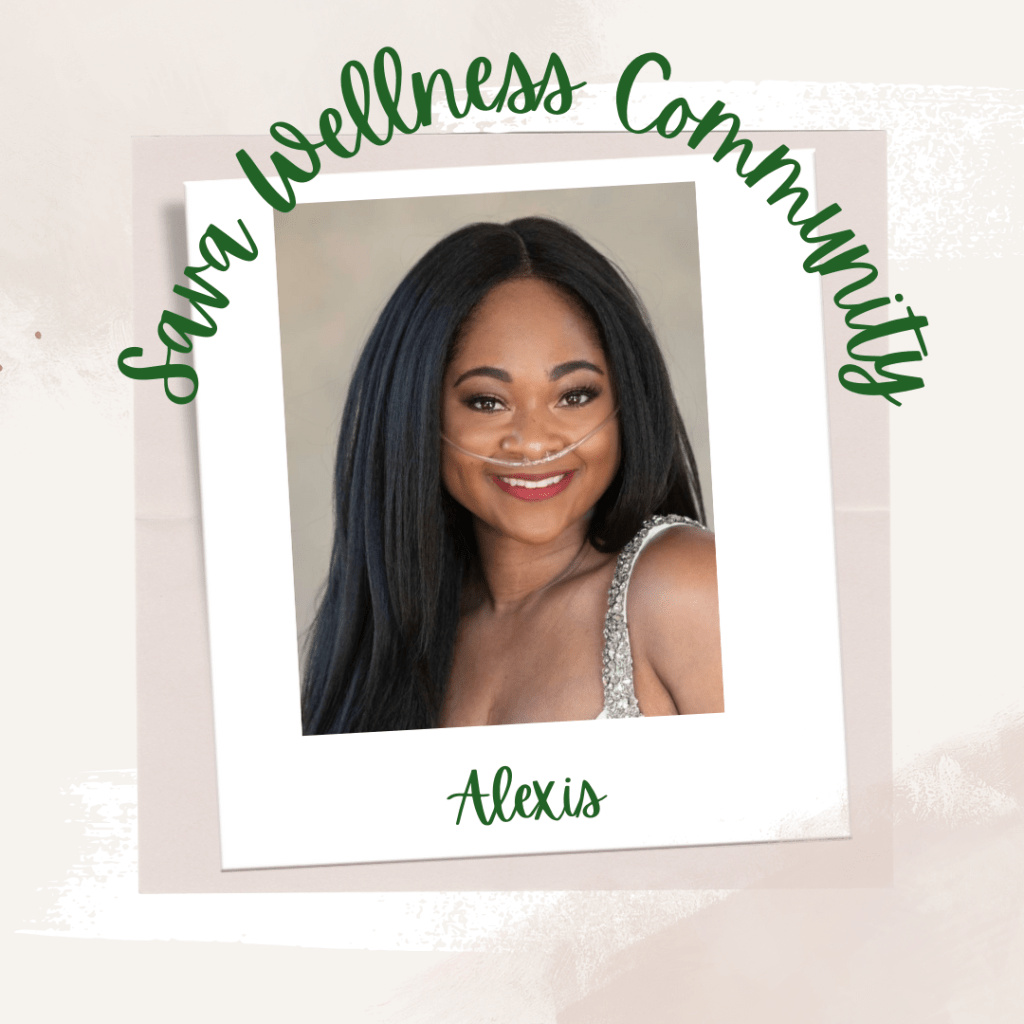
It is time for another instalment of the Sava Wellness Community interview series! This month we hear from Alexis (she/her) from the US. Alexis speaks on many different topics including her diagnosis of Pulmonary Hypertension at a young age; ableism and the pandemic; internalized ableism; and wanting modifications in the workplace does not take something away from an abled-bodied person, but allows people with disabilities to work effectively.
Alexis is very open and speaks a lot about the different forms of advocacy in the chronic illness and disability community, please make sure to watch her interview!
You can find and follow Alexis on Instagram, YouTube, and TikTok @takeabreathwithalexis Make sure to follow along to see how Alexis is a natural advocator and creates her awesome digital content!
Sava Wellness was created to help spread awareness about chronic illness. Head over to the booking page to see how you can book Sarah for speaking engagements about inclusivity and chronic illness. Sava Wellness also provides one-on-one virtual support appointments.
This morning I sat down to think about this post. After a month of taking things slower I wondered what I should write. I looked out the window at our tree in the front yard. There are no more leaves and there are still some berries in the tree that birds come to eat during the winter. As I watched it started to lightly snow. I realized how beautiful that falling snow can be and when the sun broke through the clouds and the snow start to sparkle, it was breathtaking. It seems like something that someone makes up for drama, but every once in a while nature likes to bring its own drama. It reminded me that this week I have seen a Cedar Waxwing bird in this same tree eating the berries, they rarely come to our tree. And then yesterday two Bluejays came and sat on the lanterns that I have near the tree. A stunning rarity as well. In each of these cases I could have just kept moving, onto the next task or checking my social media, but I didn’t. I took the time to stop and really pay attention and I was rewarded. In our lives we are told to be more and more productive, that sitting down and just being is such a bad thing. But why? Watching nature makes me happy and I feel like I can relax a bit more when I take these tiny moments. This is something that I would like to do more often, not only to be more grounded and peaceful, but to truly be present.
The next coming month can be very busy, and quite frankly stressful, for so many people. Remember that it is not selfish to take care of yourself. You know the best way to care for yourself and try to not let anyone sway you from that. Need to take a break from social media? Do it! Long hot baths? Do it! Copious amounts of tea while reading a book just for fun? Do it! Now I know that is way easier to say then do, so let’s start small. Take a moment to watch the snow, to go outside and breathe fresh air, or smell fresh baked cookies. Take one minute for yourself where you are fully present and see what that can do for you.
A Note on Giving
The holiday season is a season of giving. This doesn’t just have to be gifts or money. This can also be in acts of service and love. If there is someone in your life that is struggling offer to help do the groceries, to bring some meals over, do some cleaning, bake some holiday treats for them, or help them decorate if that is what they would like to do. Offer to help with genuineness and kindness. It is amazing what little acts of kindness can do for someone’s holiday, whether they have chronic illness or not. Let’s all do our part to spread more love and kindness this holiday season.
This has been a season of false starts and stops here in Calgary. We thought summer was done and fall would begin, but then we had summer weather again. And then a couple days of fall, and then back to summer. This week we might even start deep winter with the coming weeks predictions. As a fall person, I am thrilled. Being able to walk outside while the trees still have their leaves on them while changing colour and it is not cold out is a magical feeling. There is something so rejuvenating about fresh air.
These false starts and stops to different seasons can be related to chronic illness in many ways. On the journey to get a diagnosis, in your condition in general and the cycling of symptoms, in feeling “normal” or having a flare, or in how you feel about yourself. Chronic illness is never static or stable. It is constantly changing and moving. This is often very frustrating and why the answer to “how are you doing?” changes every day. And, like these false starts and stops to the season, does not have a set pattern, nor any rhyme-or-reason. The changes can come quick or be prolonged but can never be predicted. With this in mind, be kind to yourself, you are learning to deal with uncertainty and you are doing great.
Remember, it is okay to take a rest. It is not selfish to care for yourself. It makes love and joy so much easier to give when you first have given yourself that same attention. Love yourself and take care until next month.
In this month’s Sava Wellness Community Interview Series we get to discover the experiences of Raegan (she/her). Raegan has a different perspective than the other interviews we have had so far because she always assumed that her symptoms were how her body existed. This is an important point to note because if you have something that is making your life difficult to endure, this is not “normal” and you should talk to someone who can help you (like Raegan found with her caring doctor). Please read on to learn more about Raegan and her new business!
Hello Raegan! It is great to talk with you today. Could you please tell us a little about yourself?
I live in the US. I live part time in NYC and part time in Miami. I have an amazing wife and stepdaughter. They are my world. My boxer dog, Leila, crossed the bridge almost 2 years ago. Leila was my soul dog and the loss was extremely difficult for me. I don’t know how I would have handled it if not for the love of my wife. My all-time favorite thing is going to Disney World! While there, I love taking photos and documenting all the magical sights. Disney means a lot to me. It’s a place where I can freely be myself without judgment. Additionally, I love animals, reading, and spending time with loved ones.
What terms do you like to use in relation to your illnesses/disabilities?
Autoimmune or chronic illness. I don’t necessarily use the terms often, but on occasion if I am discussing my illnesses, that is how I refer to them. More often I just refer to them by name (ulcerative colitis, endometriosis, chronic fatigue).
If you have a job outside of your chronic illness and want to share about it, can you please tell us what it is?
I am a LMSW (masters in social work). I have been working as a clinical therapist for over 10 years. During the shutdown in 2020, I began working remotely, and have been remote ever since.
Do you have a diagnosis for your symptoms?
I was diagnosed with Endometriosis in 2006, Ulcerative Colitis in 2017, and Chronic fatigue in 2021.
Does having a diagnosis help you?
I had symptoms most of my life. Some relatively mild, others severe. Receiving a diagnosis was extremely helpful in that I was able to get medication that actually helps me. It’s also helpful now that I am at least aware of what’s going on and how to better help myself.
How long did it take for you to get a diagnosis?
I wasn’t necessarily aware of the severity of what was going on with me, so I’m not sure that I was actively seeking a diagnosis. So although it did take several years to be diagnosed, this was probably my own fault.
When did you first realize that you had chronic illness and how has your journey been since then?
My symptoms got worse and worse. Eventually they got so bad that I ended up bedridden, and then hospitalized for quite a while. This is when I was diagnosed. Since then, it’s been a rollercoaster, but I was so lucky because my doctor was incredibly caring and made certain to figure out the correct medication to best help me. This medicine has been extremely effective and my symptoms are much more manageable.
How has your experiences of the world changed since your symptoms started?
Due to the fact that I’ve had many of the symptoms for most of my life, I can’t really recall knowing any different. This is why I was not actively seeking a diagnosis; I thought this was just how my body functioned.
Which of your symptoms do you find the most debilitating and why?
During a colitis flare, the symptoms can be severe. There are times I am barely able to function. The colitis bleeding causes dangerous anemia. In the past, the blood loss caused fainting spells. The pain can be excruciating. Being that the flare originates from active ulcers in the intestine, and ingesting anything will exacerbate the symptoms, there is generally no effective way to treat the pain. This is the case for me personally, some people are able to tolerate various pain pills and other treatments during a flare.
Can you describe what a bad day symptom-wise looks like to you?
Pain that causes me to double over, sometimes making it difficult to breathe, uncontrollable bleeding, urgent and excessive use of the restroom, unable to get out of bed due to anemia and chronic fatigue, very low body temp, chills, dizziness, and heightened anxiety.
When you have a good symptom day, what do you like to do?
I like to get everything done. Work, cleaning, laundry, food shopping, anything I need to complete. I also like to work out and go walking when I feel well enough. Exercise really helps the endometriosis symptoms, (which can be very painful) but can sometimes bring on colitis symptoms.
What has been the most helpful for you as you have gone through this journey?
The right medication has been pivotal in having more good days. I am so lucky to have found such a caring and patient wife and stepdaughter. They always want to help me in any way possible, they’re understanding, and most importantly for me they never ever make me feel like I’m a burden. I am so grateful to have them.
Is there anything you would like people to know about your chronic illness or chronic illness in general?
I hope people can become aware and more understanding of “invisible illnesses.” You never know what someone is dealing with.
To follow along with Raegan’s favourite hobby, Disney, please follow her Instagram: @disney_raenbow. Also make sure to follow her new business, “my wife and I make homemade, all natural dog treats and biscuits. We just started a small shop on Etsy called ‘Leila’s Pup Treats’ named after my old dog. The site is leilaspuptreats.etsy.com and the Instagram is @leilas.pup.treats”
At the end of September the leaves in my hometown are in the process of changing colour and many trees have already lost all of their leaves. With a look into October we enter into a space of ending the seasonal plants and colder temperatures are approaching. It can be a time of coziness and reflection and an urgency of taking all the nice weather that still comes and savouring it.
As the days get colder and the weather starts to change, it can become quite isolating for people with chronic illness and disabilities since they cannot safely navigate the elements when they go outside. It is important to continue to check in with your friends that are differently-abled.
Not only can the weather create isolation, but so can experiencing a flare.
A part of chronic illness that almost always catches you by surprise is flares. They come whenever they want, usually come on very quickly, and lasts for almost longer then you can possibly stand.
Flares are frustrating in many ways. You never know when they will come or how long they will stay. You don’t have to “do” something to get a flare. You have to cancel everything for the upcoming week—you can try to fight it but 95% of the time it takes a week to recover. And they are demoralizing and can affect your mental health.
So what do you do when you have a flare? You take it one minute at a time because that is all you can handle. You do what absolutely has to be done and forget the rest. You throw your weekly to-do list out the window. You lean heavily on your support system. You listen to your body and take the time and care it needs. And you wish for it to end soon.
If you know someone who goes into a flare, be extra patient and kind. They feel like their world is imploding and are probably not sure how they can survive it. Offer to help with household tasks and food, they probably desperately need it. And, as always, love them.
Take a moment if you can to crunch some fall leaves, the sound will make you smile! Find little moments of joy and remember you are not alone!
In this month’s Sava Wellness Community interview series we get to listen to Trish (she/her) from Canada. Trish describes her seventeen year journey with chronic pain and has a great metaphor to describe how her pain just started one day. Trish also talks about how she manages her pain and illness, and how she has been extremely judged for using societal aids because her symptoms are invisible. Trish also explains how exciting it is to make your world big!
Hello Trish! It is great to talk with you today. Could you please tell us a little about yourself?
I live in a townhouse with my two adult daughters on a quiet cul-de-sac. It is older and has lots of windows, which are great for light during our long, cold winters here in Canada. Our small deck is my favourite summer place, I love to drink tea on it and read a book in the mornings. My pain prohibits me from getting up early every day, and slow starts are the best thing for me. Of course that doesn’t happen every day, and I try to make the most of the days when it does. I was a stay at home mom for years and am now a carer for a chronically ill daughter.
I use the terms ‘chronically ill’ and ‘disabled’ when thinking about myself. I find that terms have changed over time, but while these are older they are still applicable for a lot of chronically ill persons. To me ‘disabled’ is the opposite of able-bodied and is a helpful framing for how I navigate the world in my body. I experience chronic pain and find that this term is much less understood, and when/if I use it I am more likely to hear everybody’s pain stories, relevant or not.
Do you have a diagnosis for your symptoms, if you don’t, can you please describe your symptoms?Does not having a diagnosis affect how you live your daily life?
My illness diagnosis is complex in the fact that it doesn’t have an easy label, but it is physiologically based. It started with pain, and it took many different professionals before I found someone who knew what was happening. When I encounter someone who does not believe in chronic pain, I know that it is not all in my head because it is physiological. People want to know what my chronic illness is called, as if they are more comfortable with a label. To me a label doesn’t matter, because it doesn’t change how I feel regardless.
My symptoms have grown the longer I have chronic pain. In addition to the pain throughout my body, I have brain fog, loss of strength in my limbs, side effects from my medication (issues with weight gain, dry mouth, burning mouth syndrome), balance issues and general instability, and mobility issues. My chronic illness started seventeen years ago, and the words ‘chronic illness’ were not even in my or most people’s vocabulary. One day it just started. Someone told me that it is like a tap dripping slowly into a glass of water and finally it overflows, and that is the start of the pain. Throughout my journey I have tried many different unsuccessful treatments to try to ‘fix’ my body, and now I have strategies to help me manage the pain and illness since there is no fix. I live with pain and disability every day.
How has your experiences of the world changed since your symptoms started?
For quite a while after my symptoms started my world was much smaller. I had to give up a lot of things. Over the years though, I have taken back parts of the world and made it fit me. I don’t feel as limited as when it first started.
I’ve found supports that work for me to navigate daily living as best as I can and reduce my limitations. For example, I have a handicap placard because I am unable to walk far distances. I always use it because my mobility exhaustion comes upon me quickly. I have had lots of judgemental looks for using the handicapped parking spots and it hurts. I can remember two extremely hurtful incidents where I was approached and scolded for using them. I have had to grow a thick skin. It’s sad that we are judged and punished by society (especially for those with invisible disabilities like myself) for something that we did not ask for and already struggle to deal with on a daily basis. I also use a wheelchair when going out for long periods of time or walking long distances. For example, when travelling my daughter (the one who isn’t chronically ill) will push me in the wheelchair in airports or on long walks. We have been able to do incredible trips because of this mobility aid—I would never be able to walk around a Disney park, for example, or through crowded city hubs—and I have chosen to have the mindset that my wheelchair isn’t a limitation, it’s a way of being able to do exciting things that I couldn’t otherwise do.
Which of your symptoms do you find the most debilitating and why? What does a bad and a good symptom day look like for you?
My most debilitating symptom is the pain. It is with me constantly and is very tiring. A bad day symptom-wise is when I can barely get up from the couch. The pain makes my whole body feel physically heavier than it is. On good days I like to go for walks, be outside in nature, or bake something nice for my family.
What has been the most helpful for you as you have gone through this journey?
My daughters have been my biggest support and cheerleaders. They are always there for me, they encourage me to keep going and support me when I need help. They give me unconditional love, no matter what.
Is there anything you would like people to know about your chronic illness or chronic illness in general?
I know that people with chronic illness don’t like to ask for help, myself included. My message to them is to ask for help, it is not a weakness, it is a strength to acknowledge your limitations. Make your world as big as you possibly can!
Today is the first day of September which means the wrap up of summer. For people with chronic illness/disability there are two reactions to summer finishing. The first being sadness that they no longer have the life giving warmth of the sun anymore. The other group is extremely thankful that the heat that sets off their symptoms will be subsiding. Leading into fall is usually about hope and new starts. For many of us this is much needed as the intense weather this summer has had significant impacts on our world.
For example. in Canada right now, and throughout the summer, B.C., Alberta, Saskatchewan, Northwest Territories, Quebec, Ontario, and Nova Scotia are on fire. Wildfires are raging all over the place. Many people have been evacuated from their homes and many people will have no homes to go back to. On top of that the environmental cost of this disaster is incalculable.
Wildfire smoke is obviously not healthy for you. The amount of toxins that are in the smoke is high. This affects everyone. However, it can affect people with chronic illness more. Symptoms are aggravated, and new symptoms such as headaches, nausea, sore throats, and actual allergic reactions to the smoke can occur. It makes people lethargic and just plain sick. And this is just the smoke which can come from a distance of 8 hours away, let alone if you live closer.
I am saddened to think of how much more earth and people’s homes will be destroyed. I wish there was something I could do to stop these fires. We can hope that the fall season will bring more rain. It can be easy to feel overwhelmed and like there is nothing to be done. I have found one Canadian company that does the best they can to help by planting new trees in the areas that have been devastated by wildfires.
tentree is an ethical based, B-Certified environmental company that makes sustainable clothing. Not only are their products fun, soft, and stylish, I always feel good knowing that my purchase helps combat climate change. Every item that you purchase plants at least ten trees (hence the name!). So far they have planted over 100 million trees! They plant trees from their products and carbon offset programs in many different areas around the world that have need. Due to the overwhelming wildfires in Canada, they are ensuring that many of their trees will be planted where there has been wildfire devastation. They are a great company and it feels good to do something in the face of overwhelming catastrophe.




 Sava Wellness