Author: Sarah

  • Laurely ✨

    For this month’s Sava Wellness Community interview series, I have the pleasure of interviewing Laurely (she/her) from the US. Laurely is passionate about bringing awareness to endometriosis and advocating for yourself by finding the right doctors. She has found functional medicine to be essential to her healing and hopes that the healing continues. Laurely describes herself as a person who is chronically ill. Laurely “chose this description because my existence is not defined by my illnesses. It’s helpful to remember that I am not my conditions. I still have a lot to offer as a person.”

    Hello Laurely! It is awesome to talk with you today. Could you please tell us a little about yourself? 

    I have a very close family including my fur baby, Okey. We love to watch tv together, including my fur baby. Personally, I like to read, do qigong and yoga, crochet, disneybound, draw, listen to calming music and watch Chinese dramas. Since the pandemic, I started working from home as a virtual assistant (billing and scheduling), English teacher and tutor. It can be a hectic schedule, but improving one’s health can be very expensive. And, I really do love the mixture of what I’m able to do from home!

    Do you have a diagnosis for your symptoms? Can you tell us what it is and describe what that means for you? How long did it take for you to get a diagnosis?

    I’ve been diagnosed with endometriosis, histamine issues with foods, and mold toxicity. I’ve had endo for about 20 years and struggled in silence for the first batch of years thinking the pain I was feeling was just the price of being a woman with a cycle. It wasn’t a long diagnosis process for endo because the first doctor I actually told about it labeled it immediately. However, she said I had only 2 options: surgery or birth control. I was young and deathly scared of the word surgery, so I started taking birth control. That worked for about a year, but I developed PVC (premature ventricular contractions) at the same time, an effect, I learned, from the heightened chemical levels in my body, probably affected by taking the birth control. And, the pains came tumbling back with the alternative birth control option. It wasn’t until I started seeking out naturopathic and functional medicine doctors that we discovered just a year ago that, in addition to endometriosis, my body was highly toxic with a particular type of mold. My toxicity level was almost off the charts.

    The histamine intolerance was discovered by chance through a Zoom call with a friend about 2 years ago. This friend has her own health struggles and encouraged me to try a low histamine diet and seeing if it helped. I was amazed at the lowered level of pain I felt after being on the diet for a few months. It didn’t get rid of the pains, but the difference was huge. At some point, I had developed an issue with histamine in foods and it’s still a problem that affects my eating habits.

    When did you first realize that you had chronic illness and how has your journey been since then? 

    When I was throwing up after eating certain foods on my period and my pains were becoming unbearable I knew something was up. When you can’t get off the couch to join a normal family outing, there’s a problem. That eventually developed into intense leg pressure, back pain that felt like I was breaking in half, deep cramping, persistent nausea and becoming couch bound in the fetal position for 24-72 hours just trying to breathe. These got so bad my family wanted to take me to the hospital each time my cycle came on. I was barely able to eat anything or keep any food I did eat down. This meant I lost a lot of weight after 3 days of barely eating if at all. This level of weakness is something no one wants to experience or see someone else suffering from, especially when there are no answers or guidance through it.
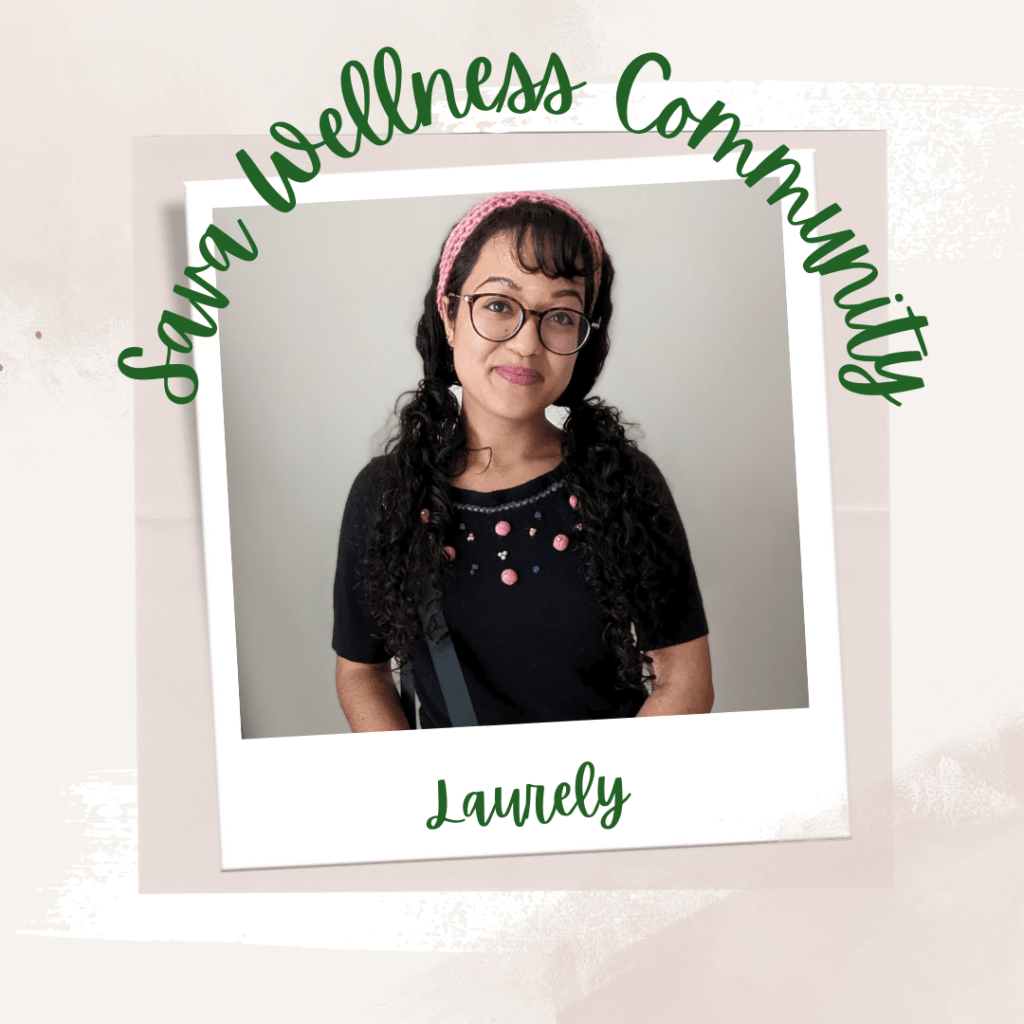
    The words “Sava Wellness Community” are written in green cursive script over top of a polaroid picture. The polaroid picture is sitting on top of multiple layers of pink, cream, and white watercolour background. The polaroid picture has the name “Laurely” written in green under it. The picture is of Laurely smiling at the camera with her hair in pigtails and a pink crocheted headband. Laurely wears glasses and is wearing a black t-shirt with crochet elements and has a bag over her right shoulder.

    How has your experiences of the world changed since your symptoms started? 

    Now, my entire routine from skincare to hair care to food is as organic and clean as possible and as low in histamine as I can manage. Seeing the foods that I used to eat still entices me to want to eat them, but at the same time, I see the issues with the foods that are eaten in America. I’ve always heard that America’s food is one of the worst in the world, but I only now understand just how terrible the amount of  chemicals, preservatives, pesticides and carcinogenic products in our foods are. And, I’ve learned how much damage it can all do to our bodies. While food can bring us joy, at the end of the day, our bodies need its nutrients to survive. All we can do is research what we can and make the best choices we can with what’s accessible. It’s much more expensive in the US to get away from nutrient poor foods, but it can become 100% necessary to survival for some of us.

    Which of your symptoms do you find the most debilitating and why?

    I’d have to say the unexplained, searing pain that runs throughout the lower half of my body is the most debilitating. On my worst of the worst days, I can’t sit up, think, focus or talk. I was taking days off from work each time my cycle came around because it was impossible to be polite around others and get work done in the office properly. One time I made it to work and was sent home a few hours later when people started realizing how terrible I felt. I absolutely hate cancelling on people or taking off from work. But, when the pain would hit, I’d have no choice. And, no doctor can tell me why I feel the pain so intensely and in the places I feel it. Endometriosis in itself is unexplained in origin and reason. So, the pain is extremely hard to rationalize to myself and explain to others. Unless you have it, you can’t understand it. 

    Can you describe what a bad day symptom-wise looks like to you?

    Thankfully, since I’ve started working with my new functional medicine doctor and she discovered the mold toxicity, my worst days are (hopefully) behind me. But, I still have bad days despite the work we’ve done so far. A bad day has already started with nausea and ovary pain/pressure the days leading up to my cycle. On the day my cycle starts, the pain in my hip and abdomen kicks into gear, and I know I need to situate my work station to my bed, or a comfy, inclined chair. Usually the first few hours are characterized by the pain slowly increasing, nausea stopping me from eating anything else and my leg beginning to weaken. Sometimes a headache follows and I end up fighting sleep the rest of the day. If the pain increases into the night, it’s a sleepless and lonely night just waiting for the worst of it to pass. On these days, I’m not very productive and tend to isolate away from friends and family. My mood during these times is not very good either. There’s just so much going on inside that thinking clearly is beyond my ability and my body goes into survival mode.

    When you have a good symptom day, what do you like to do?

    This is kind of a little secret of mine, but if I have a really good cycle, I reward myself with vegan marshmallows or chocolate that’s a little less than 85% dark. I’d like to say that I go out and do something physical, but just sitting, reading, or crocheting finally without pain and finally being able to eat becomes so beautiful to me. Match that with a yummy bag of vegan marshmallows, and I’m a happy camper.

    What has been the most helpful for you as you have gone through this journey? Is there anything you would like people to know about your chronic illness or chronic illness in general?

    The most helpful thing in my journey has been the internal and external motivation from family and friends to find the right doctor for me. I have had many people along the way judge me for not going to hospital or taking conventional medicine or paying all of this money into my health protocol. But, I tuned those critics out and continued in my search. If someone comes to me with an agenda to push conventional medicine on me and make me feel bad, I tell myself I’ve taken the pills, I’ve had the surgery and nothing worked. My health is my responsibility. I will push through as much as I can to continue to see improvement in my health and be surrounded by a medical team and support system who listens to and validates every discomfort or odd sensation I feel. Sometimes, you have to be your own best advocate and keep fighting. There are no ultimate answers in this world for many of the issues we face. I’m not even looking for a life free of all pain. But, if there’s a way for me to live a life of less pain and more happiness around food and activities, I will continue toward it in any way I can.

    Thank you Laurely! 

    If you have followed along with the Sava Wellness Community interview series, you know that at the end of every interview the interviewees are asked what they would like to promote. Laurely has chosen to promote @endowhat because “it’s relatable, educational and so validating for anyone affected by Endometriosis directly or indirectly.” So please go and follow along to learn more about Endometriosis.

    In addition to Laurely’s promotion piece, I (Sarah), would like to also promote that Laurely has an awesome gift box business that contain books, accessories, art, and crochet pieces called @tinkermadegifts and her profile that showcases her fun disneybounds is @thecurlytink (both on Instagram and her business Etsy is here). Please make sure to go and follow along! (And don’t worry, I asked for permission to promote these as well.)
  • Welcome to Sava Wellness!

    Hello and Welcome to the new Sava Wellness!

    First an introduction!

    Sava Wellness is a chronic illness support business where people with chronic illnesses and people with visible and invisible disabilities can come to be supported. We offer virtual one-on-one appointments to provide support and strategies for navigating chronic illness. This could include structured or conversational support such as: regular support check-ins to talk about how you are feeling, support for how to deal with situations that have changed because of your chronic illness or disabilities, strategies to navigate the world with chronic illness and disabilities, and peer-support from a knowledgeable listener who understands what it is like to have chronic illnesses and disabilities.

    Through Sava Wellness, Sarah is also available for speaking engagements, conference keynotes, and educational webinars to educate and communicate the differences and challenges of living with chronic illnesses and invisible disabilities and to support initiatives to make the world more inclusive.

    What a month!

    The month of July is special in many ways for us at Sava Wellness. This month was the launch of the Sava Wellness Community: Interview Series. The interview series was created to celebrate the differences of people and to continue to bring awareness about chronic illnesses and disabilities. We have heard from four amazing people and their experiences with chronic illnesses and disabilities. July is also chronic disease month and disability pride month, and that is why the interview series was launched and that there are so many interviews to share!

    Below are some snippets from the interviews and the links to listen or read the interviews. To be inclusive of all types of chronic illness and disabilities the interviews have been conducted in a number of ways. Some were recorded and the videos of the conversations have been posted. Others were done verbally and the interviews transcribed. And still others were done completely via email. These differences in interviews show that chronic illness and disabilities can affect everyone differently. Some people need the questions beforehand, some need the time to think of their answers, some have such bad brain fog that they need to carefully write out their answers and review them. Each style shows the different ways that people accommodate, and have learned to function, with their chronic illnesses/disabilities. Sava Wellness is an inclusive space for people to authentically reflect on their chronic illnesses and disabilities, and that is why some of the interviews are written and some are in video format. We thank you for taking the time to look at both kinds of interviews.

    Please make sure you follow along as the interviews are raw, real, and inspiring!

    Interviews From This Month

    Courtney:

    Courtney (she/her/hers) is a senior scientist with chronic illness who lives in the USA. She has fibromyalgia, psoriatic arthritis, and hidradenitis suppurativa. We talk about the difference between having or not having a diagnosis and how both of these can affect your life.

    She also talks about different terms people use to describe themselves when they have chronic illnesses, the differences in having a diagnosis or not, and what Courtney would like people to know about chronic illness (3 important points!).

    You can find Courtney and her husband, Rick, talking about restaurants and visiting theme parks on the “Tall Guy Talks Travel with Rick Dougherty” YouTube channel and Podcast. Please subscribe to YouTube @tallguytalkstravel7657, and also follow along on Instagram @rickdoughertytgtt and Twitter @rick_ear

    Here is the link to Courtney’s interview on the Sava Wellness Community page, please take a read.

    Adele:

    Adele (she/her) is an illustrator with chronic illness who lives in the UK. She has chronic fatigue and fibromyalgia. Adele describes the joy of drawing and how due to her illnesses she has had to create and keep boundaries.

    In the interview Adele describes her long journey of being diagnosed and how due to her illnesses she has had to create and keep boundaries. We talk about brain fog, how chronic illness can affect your mental health, and how patience towards people with chronic illness is key.

    She also takes about her joy, and passion!, about being a small shop owner and creating her illustrations. Adele talks of how she now enjoys the little things in life and that her chronic illnesses have caused her to not overlook them.

    Make sure to check out Adele’s lovely illustrations that she turns into stickers, colouring books, enamel pins, and more! Find her on Etsy, YouTube and Instagram @delliesdesigns!

    Here is the link to Adele’s interview on the Sava Wellness Community page, and here is the direct link to the YouTube video.

    Beth:

    Beth (she/her) is an artist that incorporates medical devices into her art. She lives with chronic illness and resides in the UK. Beth has IBD (ulcerative colitis) and talks about the stigma around bodies and how an ostomy is not a cure but a treatment.

    Beth talks about how having an ileostomy surgery helped her live again. She also talks about how hard it is to have her illness when there is so much stigma around bodies and bodily functions, how getting a diagnosis is relieving at first, but then you learn about having an autoimmune disease that is lifelong. Through her chronic illness Beth has learned to advocate for herself through pure frustration, realized the need for accessibility in the world, and how easy it is to normalize symptoms in everyday life only to realize how difficult it is when someone asks you to explain them.

    When Beth received her surgery, she turned to drawing to help her cope. Each figure she drew had an ostomy bag. Inspired, Beth has created a whole line of prints, stickers, and more!, that feature beautiful bodies with medical devices.

    Through her art, Beth aims to normalize medical devices and bodies through empowerment. Please check out her Instagram @broken_n_brave and her website https://brokennbrave.co.uk/

    Here is the link to Beth’s interview on the Sava Wellness Community page, and here is the direct link to the YouTube video.

    Sarah:

    Sarah (she/her/hers), the owner of Sava Wellness, lives in Canada and has dealt with chronic illnesses/disabilities for many years. In this interview, Sarah talks about learning self-advocacy, her diagnoses of Lyme disease and chronic fatigue, grieving, and much more!

    This instalment of the Sava Wellness Community Interview Series is a different and exciting episode where Sarah, the owner of Sava Wellness, is interviewed by Rick Dougherty, who is the creator and host of the “Tall Guy Talks Travel with Rick Dougherty” YouTube channel and podcast series.

    Sarah talks about learning self-advocacy, what kinds of terminology to use around people with chronic illnesses and/or disabilities, her diagnoses of Lyme disease and chronic fatigue and how these impact her life, how to talk to family and friends about your chronic illnesses/disabilities, which includes grieving and much more!

    Here is the link to Sarah’s interview on the Sava Wellness Community page, here is the direct link to the Sava Wellness Preview YouTube video, and the full interview video on the TGTT YouTube channel is here.

    Stay tuned for next month where there are more interviews to follow along with and continue to learn about the differences people with chronic illnesses and/or disabilities live with to exist in the world.

    Ending Note

    Chronic disease month and disability pride month is coming to an end, let’s remember that even though it is no longer chronic disease month and disability pride month, that people with chronic illnesses and disabilities will still have symptoms and struggles to fit into society outside of this month. We should remember that they still appreciate people reaching out to them and people in their lives that try to understand what they are going through.

    Thank you for following along with the Sava Wellness journey! Stay tuned to learn more about what Sava Wellness is doing to create a more inclusive world for people with chronic illnesses/disabilities!

    Please subscribe to the newsletter through the footer of the Sava Wellness website. You can also follow along with Sava Wellness through the YouTube channel, Instagram and Facebook.

  • Sarah 🏔

    In this instalment of the Sava Wellness Community Interview Series we offer a preview of a different and exciting episode where Sarah, the owner of Sava Wellness, is interviewed by Rick Dougherty, who is the creator and host of the “Tall Guy Talks Travel” YouTube channel and podcast series. 

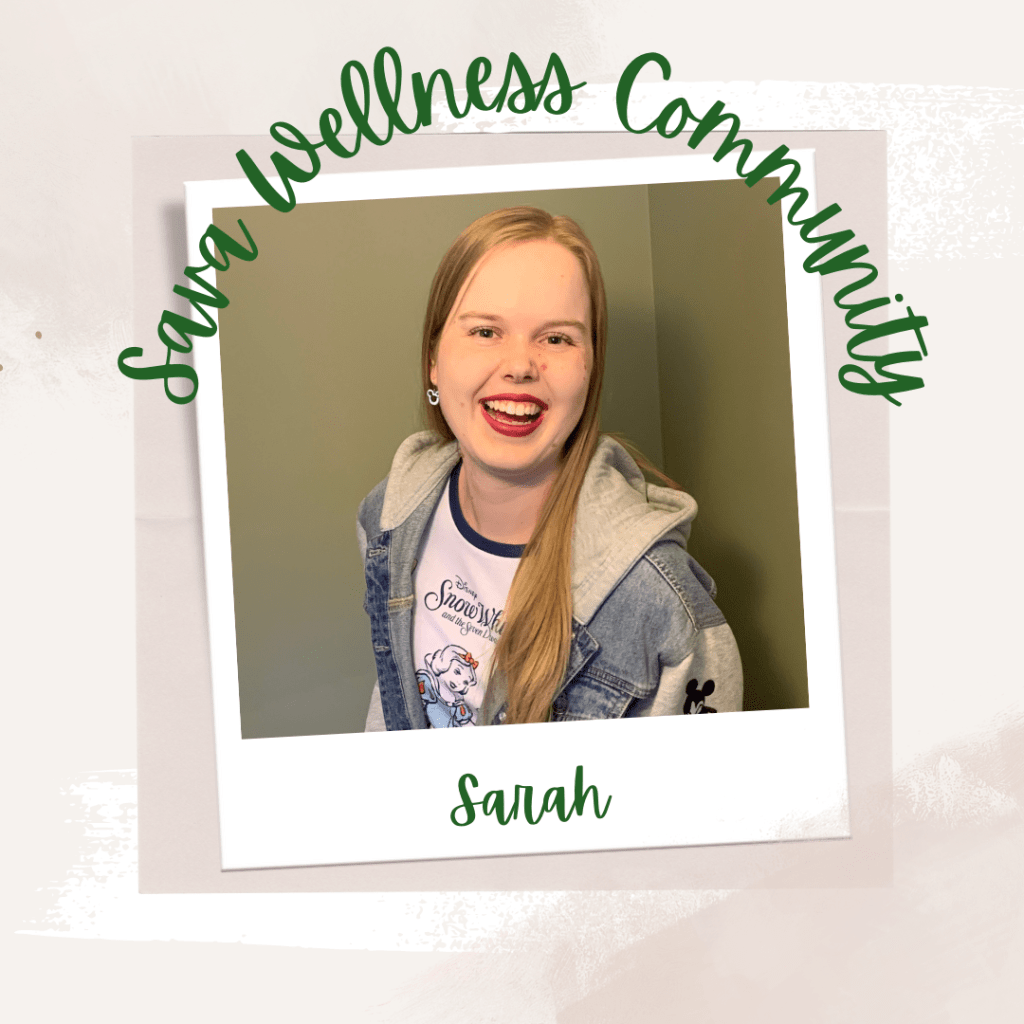
    The words “Sava Wellness Community” are written in green cursive script over top of a polaroid picture. The polaroid picture is sitting on top of multiple layers of pink, cream, and white watercolour background. The polaroid picture has the name “Sarah” written in green under it. The picture is of Sarah smiling at the camera. Sarah has her blonde hair down, is wearing red lipstick, and has a jean jacket over a t-shirt on.

    Sarah talks about learning self-advocacy, what kinds of terminology to use around people with chronic illnesses and/or disabilities, her diagnoses of Lyme disease and chronic fatigue and how these impact her life, how to talk to family and friends about your chronic illnesses/disabilities, which includes grieving and much more! The conversation continues on the “Tall Guy Talks Travel” channel where you will get to see brain fog in action, and learn about toxic positivity, myths about chronic illnesses, and what people with chronic illness want, and not want, to hear.

    Sarah is a frequent guest on the “Tall Guy Talks Travel” podcast series, but in this bonus episode of “Tall Guy Talks Travel” Rick specifically interviews Sarah about her experiences with chronic illnesses/disabilities. This collaboration celebrates chronic disease month and disability pride month, which takes place during the month of July!

    Below is the preview video on the Sava Wellness YouTube channel. You can find the full interview over on the “Tall Guy Talks Travel” channel here.

    Sava Wellness was created to help spread awareness about chronic illness. Head over to the booking page to see how you can book Sarah for speaking engagements about inclusivity and chronic illness.

  • Beth 🌷

    The words “Sava Wellness Community” are written in green cursive script over top of a polaroid picture. The polaroid picture is sitting on top of multiple layers of pink, cream, and white watercolour background. The polaroid picture has the name “Beth” written in green under it. The picture is of Beth smiling at the camera. Beth wears glasses, has her hair cut short, and is wearing a green cardigan over a blue and pink shirt.

    Here is another episode of Sava Wellness Community: Interview Series!

    Today listen to Beth as she talks about her IBD (ulcerative colitis) and how having an ileostomy surgery helped her live again. She also busts the myth that having an ostomy bag equals a cure, and talks about how hard it is to have her illness when there is so much stigma around bodies and bodily functions. Beth also talks about how getting a diagnosis is relieving at first, but then you learn about having an autoimmune disease that is lifelong. Through her chronic illness Beth has learned to advocate for herself through pure frustration, realized the need for accessibility in the world, and how easy it is to normalize symptoms in everyday life only to realize how difficult it is when someone asks you to explain them.

    When Beth received her surgery, she turned to drawing to help her cope. Each figure she drew had an ostomy bag. Inspired, Beth has created a whole line of prints, stickers, and more!, that feature beautiful bodies with medical devices. Through her art, Beth aims to normalize medical devices and bodies through empowerment. Please check out her Instagram @broken_n_brave and her website https://brokennbrave.co.uk/ 

    Sava Wellness was created to help spread awareness about chronic illness. Head over to the booking page to see how you can book Sarah for speaking engagements about inclusivity and chronic illness.

  • Adele 🌻

    In this instalment of Sava Wellness Community: Interview Series I talk with Adele!

    Adele lives with chronic fatigue and fibromyalgia. In the interview she describes her long journey of being diagnosed and how due to her illnesses she has had to create and keep boundaries. We talk about brain fog, how chronic illness can affect your mental health, and how patience towards people with chronic illness is key. 

    She also talks about her joy, and passion!, about being a small shop owner and creating her illustrations. Adele talks of how she now enjoys the little things in life and that her chronic illnesses have caused her to not overlook them. 

    Also make sure to check out Adele’s lovely illustrations that she turns into stickers, colouring books, enamel pins, and more! Find her on Etsy, YouTube and Instagram @delliesdesigns! 

    Sava Wellness was created to help spread awareness about chronic illness. Head over to the booking page to see how you can book Sarah for speaking engagements about inclusivity and chronic illness.

  • Courtney 🌴

    Today starts my new Sava Wellness Community: Interview Series! I have the joy of interviewing Courtney (she/her/hers). Courtney works as a senior scientist, is chronically ill, is a person with an invisible illness and has recently started to refer to herself as disabled. Please read on below to see what we talked about!

    Hello Courtney! It is wonderful to talk with you today. Could you please tell us a little about yourself? 

    I live in the hot and humid state of Florida, in Tampa Bay, which is considered central Florida, on the West coast. The winters are very comfy, though!

    I have a great husband, Rick, whom I have known since 2006. We have 2 adopted cats, who have lived with us ever since they were very young and little. They are senior cats now, and have been with us through thick and thin! We definitely love them like family and don’t know what we’d do without them. 

    I don’t have a hobby, at the moment. In the past, I have done some adult coloring books, dabbled in some crafts, and done some cross-stitching and reading. Now, I like to relax by watching streaming series or movies, and I like to keep up with the latest Disney news in the theme parks and beyond!

    Do you have a job outside of your chronic illness and want to share about it? (We all know that chronic illness is a full-time job itself!)

    I am a Senior Scientist. I assist in Quality Control for pharmaceutical products, to ensure that they are safe and effective to be on the market. I enjoy being challenged and knowing that I am good at my job, but also take pride in knowing that I have a hand in helping patients in need, with everything from common Advil to cancer drugs and even some autoimmune therapies!

    Would you like to explain what the terms chronically ill, a person with an invisible illness and disabled mean to you and how they may have changed your perspective?

    It is hard to admit that there is something wrong with you. It is sad, frustrating, and you feel you have lost some control. It can be isolating, but can also connect you to other people who identify the same way and are dealing with similar issues. The illness/disability forces you to change things about your life—your lifestyle, eating habits, what you physically can and cannot do; and it can either negatively or positively affect relationships or friendships. It can be hard to admit that you need help, and hard to explain complicated things or things that others cannot see/observe. It has made me look at areas for accessibility; for example, ramps, railings, benches, how to access mobility aids, etc.

     Do you have a diagnosis for your symptoms? 

    Yes, and no!

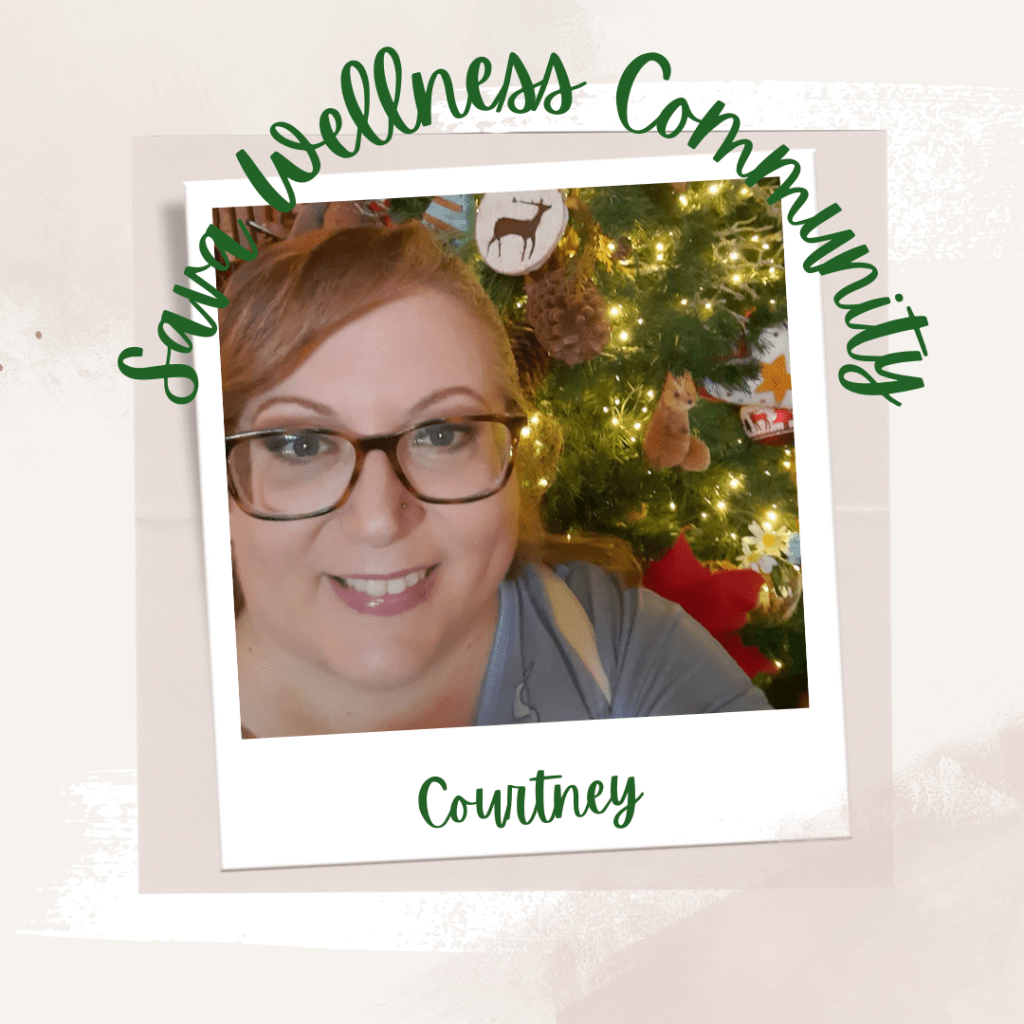
    The words “Sava Wellness Community” are written in green cursive script over top of a polaroid picture. The polaroid picture is sitting on top of multiple layers of pink, cream, and white watercolour background. The polaroid picture has the name “Courtney” written in green under it. The picture is of Courtney smiling at the camera with a Christmas tree filled with woodland ornaments behind her. Courtney wears glasses and has her hair pulled back.

    For your diagnosis, can you tell us what it is and describe what that means for you? 

    I have a diagnosis of fibromyalgia, and preliminary or suspected PsA (psoriatic arthritis), with HS (hidradenitis suppurativa), and in general, chronic inflammation. I also am diagnosed with diabetes type II, high blood pressure, issues with tachycardia, as well as dysmenorrhea and suspected endometriosis. The dysmenorrhea/endometriosis seems like just such a regular part of my life, since I have dealt with it since my teenage years. The newer diagnoses of high blood pressure and HS do not bother me very much; but I have anxiety and some very mixed strong feelings about the other newer diagnoses of fibromyalgia, PsA, chronic inflammation, and diabetes. They are a bit scarier and frustrating, and can feel depressing.

    Does having a diagnosis help you? 

    It helps to put a name to what you are feeling and experiencing, and to hopefully, know how to manage it and treat it.

    How long did it take for you to get a diagnosis? 

    The autoimmune and fibromyalgia took about 6 years of me suspecting something was wrong, before a doctor finally tested me. As for the endometriosis, it requires exploratory surgery, and the surgery was offered to me at age 20, which is now 23 years ago; but when I have tried to request the surgery in the past 6 years, I have been refused the surgery. 

    If you don’t have a diagnosis, can you please describe your symptoms? 

    I have lots of fatigue; muscle, joint, and tendon/ligament pain, muscle weakness, nausea, some dizziness, high/fast heart rate, palpitations, shortness of breath, itchiness and some rashes, headaches, body aches, some instances of numbness and tingling, loss of dexterity in hands and other parts of my body, such as legs. I also have urgent urination, and sometimes very intense pelvic pain that radiates to my lower back. 

    Does not having a diagnosis affect how you live your daily life? 

    It can feel very scary to feel intense pain, or heart palpitations, or other serious symptoms and not know what is causing them. 

    When did you first realize that you had chronic illness and how has your journey been since then? 

    The endometriosis was suspected from about age 20, and it started to make better sense around age 35 (8 years ago) when I had increasing instances of pain. As for the fibromyalgia and inflammation/autoimmune disease, I suspected something was off around age 34, but it didn’t really start clicking for me until about age 39. I was first tested at age 40, right in the middle of COVID-19 in 2020! There have been many doctor appointments not only with my primary care/family doctor, but with specialists such as rheumatologists, lots of bloodwork, and a few other tests, including things like X-rays and ultrasounds. Sometimes, you feel validated and other times, you feel you are back at square one and you are unsure of what is really going on or if the diagnoses are correct.

    How has your experiences of the world changed since your symptoms started? 

    I like to stay at home more. Sometimes, I feel like I am missing out on experiencing things. I value my rest, and don’t feel that I have to be as productive every day of the week.

    Which of your symptoms do you find the most debilitating and why?

    The fatigue is the hardest part. However, the muscle pains make it difficult to walk or exercise, or to have stamina for activities. Currently, my high heart rate and shortness of breath make me very cautious to even do simple chores around the house, but I also have to be extra-careful in the heat and sun.

    Can you describe what a bad day symptom-wise looks like to you?

    For me, I have lots of aches and low-grade to medium pains or overall body aches, and might not be able to walk comfortably or might need to limit the use of one arm, or favor one leg on a certain day. I will also feel very tired or fatigued, both in the sense of needing sleep and being lethargic with no energy. Sometimes these symptoms are accompanied by a headache.

    When you have a good symptom day, what do you like to do?

    I try to do some extra chores or go for a walk, or maybe do something I was putting off, like going shopping or getting a pedicure.

    What has been the most helpful for you as you have gone through this journey?

    Having people to talk to, and honestly, having easy access to Google and articles from entities like Mayo Clinic, so that I can do some research and I can be able to advocate for myself. It has also been helpful having the support of friends and family, and having doctors who are finally listening (somewhat!) and willing to suggest some trial-and-error therapies. I am also grateful to have a desk job as of 2 years ago, so that I can stay off of my feet and my body can be in a more relaxed state for the majority of the day. 

    Is there anything you would like people to know about your chronic illness or chronic illness in general?

    The biggest things are that 1) Most of the symptoms are “invisible,” and 2) There is no easy fix. You will not magically get better, especially with diet and exercise, as so many people like to suggest! You may start to feel better or mitigate some symptoms, but nothing seems to be a cure-all, especially diet and exercise, or yoga. Much more research needs to be done. There is a lot of trial-and-error to try to mitigate symptoms. And, 3) Weight is not an indicator of health and BMI is an outdated and problematic (i.e. racist, ableist, misogynist) measure of someone’s health. Thinner people may have illness or be healthy, and overweight people may have illness or be healthy. We have to do a better job, as a society, at looking past people’s weight. People do not always have control over their weight or their health, nor should they be judged negatively for being ill or unhealthy.

    Thank you Courtney! 

    You can see Courtney’s love for the theme parks in her picture and description of it. The picture shows me tired and a bit achy, but making an effort to do some things outside the home, like visit a Disney resort (Wilderness Lodge) for the holidays. Taking it slow, and enjoying the details. This is a relaxing resort, with cozy fireplaces, comfy chairs, a babbling brook, and comfort food like Mac n cheese and BBQ meats! Being in a happy zone like this refreshes my soul.

    You can find Courtney and her husband, Rick, talking about restaurants and visiting theme parks on the “Tall Guy Talks Travel with Rick Dougherty” YouTube channel and Podcast. Please subscribe to the YouTube here, and also follow along on Instagram @rickdoughertytgtt and Twitter @rick_ear