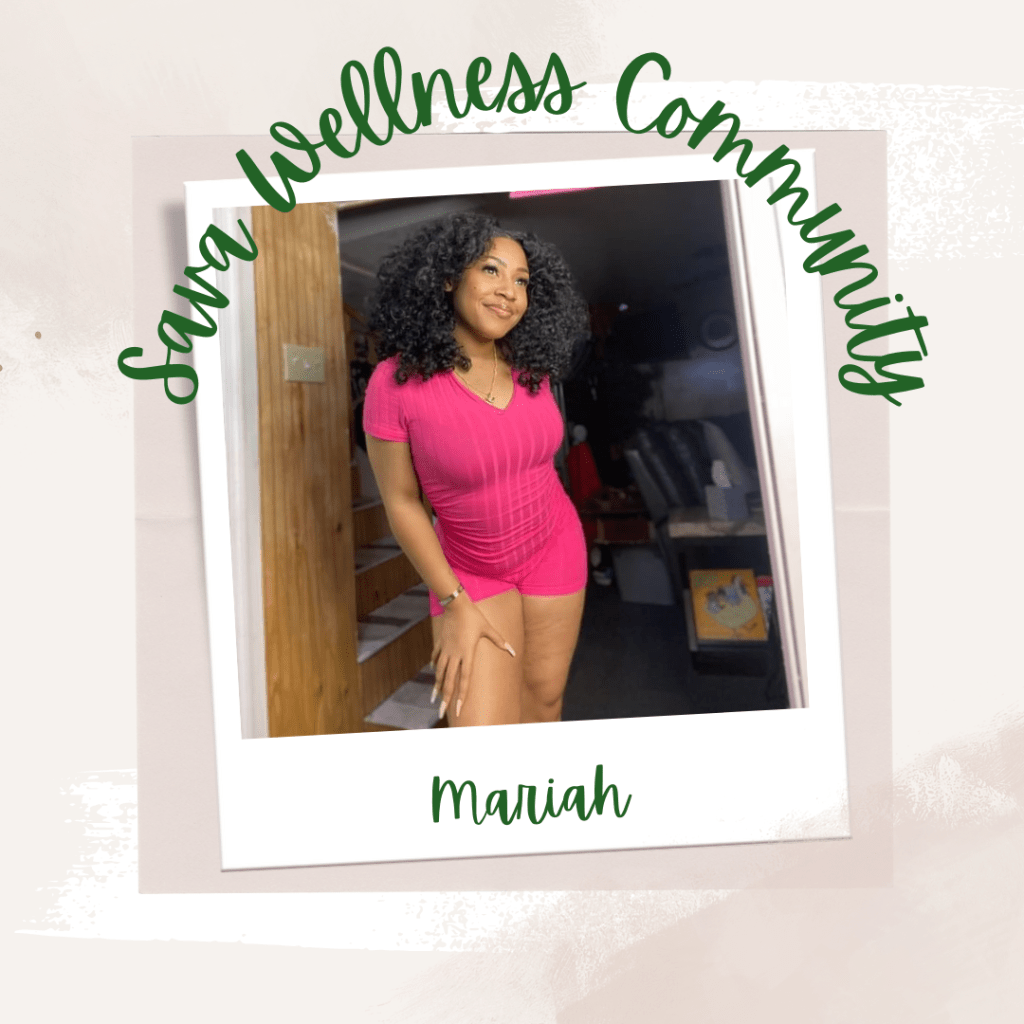
In this interview we learn about Mariah from Maryland and her experiences with many chronic conditions. Read on below to find out more!
Hello Mariah! It is awesome to talk with you today. Could you please tell us a little about yourself?
Hi! I like to describe myself as chronically ill, I live in Maryland, and I love to draw and watch SpongeBob on my free time. My family has been a blessing for me, helping me when I was unable to do anything for myself.
Do you have a diagnosis for your symptoms?
I am diagnosed with Crohn’s disease, hidradenitis suppurativa, and rheumatoid arthritis. Crohn’s disease is an inflammatory bowel disease that causes chronic inflammation of the GI tract. Hidradenitis suppurativa (HS) is a chronic skin condition that causes lumps in places like the armpits or groin. For me specifically, it affects my armpits, my private area and buttocks. Rheumatoid arthritis (RA) is a chronic inflammatory disorder usually affecting small joints in the hands and feet.
Does having a diagnosis help you?
Yes!
How long did it take for you to get a diagnosis?
For my Crohn’s it took a couple months and not long after I got a diagnosis for my RA. For my HS, it took about 3 months.
When did you first realize that you had chronic and how has your journey been since then?
I first realized something was wrong with me when I developed (what I thought at the time) sciatica, but I was so confused because I never strained my body to the point I would have a pinched nerve. It wasn’t until I started having the usual symptoms of Crohn’s, like bloody stools and loss of appetite, when I knew it was serious and time to go to the ER. Because of Crohn’s, I developed an anal fistula and had surgery for it last year in mid-July. But overall, my life now is in a much better place physically. I’m in remission for both my Crohn’s and RA. Unfortunately, I’m still dealing with flares from my HS but they’re not as bad as they were last year.
How has your experiences of the world changed since your symptoms started?
I view the world in a much different light now. I try not to take for granted the little freedom I have now and trying to live a normal and fun life like a young woman in her 20s should!
Which of your symptoms do you find the most debilitating and why?
When my Crohn’s was active, the most debilitating symptoms were the bloody stools and light-headedness. I had one very scary night that has pretty much scarred me. I get scared if I feel any sense of dizziness now. One night I had the urge to use the bathroom (which at that time I knew it was just going to be clumps of blood) and after I finished, I passed out on the bathroom floor. When I woke up, blood was everywhere! And I knew at that position it would be nearly impossible to get back up due to getting lightheaded anytime I stood up. Somehow, I managed to sprint to my bed and pass out again. I woke up to my mom panicking and screaming if I was okay. She helped clean me and the bathroom up that night.
Can you describe what a bad day symptom-wise looks like to you?
Waking up with fatigue and not feeling like getting anything done, not even getting out of bed. Or even getting up to eat.
When you have a good symptom day, what do you like to do?
Draw and play the Sims!
What has been the most helpful for you as you have gone through this journey?
God, family, and friends 🙂 you can’t ask for better help!
Is there anything you would like people to know about your chronic illness or chronic illness in general?
If you were recently diagnosed with a chronic illness, do not feel alone! There are great communities out there that can help remind you that you’re not the only one suffering. I found a great community on Instagram where I’ve made friends 🙂 The community that has helped me feel like I’m not alone in this journey @chronicloveclub on Instagram!
Thank you Mariah! You can find Mariah on her Instagram pages: her main account @loveee.spongebob and her art account @spongieart
The biggest thing that makes chronic illness/disability sucky is that you never know what is going to happen. Sometimes you have good, or maybe even great days. Other times it is awful. And often a worsening or an added symptom/diagnosis can come out of the blue. You think that you will be okay with it because you have already gone through so much, but that doesn’t mean that this new thing is still not bad. You are still allowed to be sad about it, angry, or any other emotion you are feeling in that moment. And a lot of times you need to give yourself space to grieve this new addition (or subtraction) to your life.
Sometimes after being diagnosed you believe that nothing could be worse. Especially if this has taken years and you have already had reduced capabilities in many areas of your life due to this disease. This can be so life changing that you really can’t think of anything else that would affect you so much or in the scale of things would be that bad.
So when you have another diagnosis that is shocking or also life changing, you don’t know how to react. Your brain could start going “This isn’t that bad. I have had worse. Think of everything else awful that has happened, this can’t be as bad,” and so on and so forth. This makes conceptualizing what just occurred difficult as you can try to place it on your “chronic illness sucks” scale.
At this point it is important to remember that you can always be sad about your health journey. That you are allowed to be wrestling with emotions. And that you are allowed to give yourself the permission to feel all the feelings you are feeling and acknowledge that yes you have been through bad things but this is also bad. You are allowed to grieve. Allow yourself to feel and don’t be afraid to feel. Emotions are important as they help us sort things out. And the longer you try to avoid them, or bottle them up, the harder it is to function. Your journey can be hard up to this point and this new diagnosis/symptom can also be hard, both statements are true.
And don’t be afraid to ask for help if you need it, either from family, friends, or a therapist. If none of that feels comfortable to you, book an appointment with me, I am always here to listen.
A Final Note
As we move into the season of fall, this is a great time to get cozy. Drink tea. Read a book. Watch Gilmore Girls. And it is a great time to take care of yourself. Self-care is not selfish! Plus with the weather getting worse, and it being trendy to stay inside and be cozy, this is a great time to start making self-care a habit. Remember you are important!
If you would like to learn more about chronic illness/disability but don’t want to ask your family or friends, reach out and book a chronic illness/disability support meeting with Sarah for $20 where she can answer your questions.
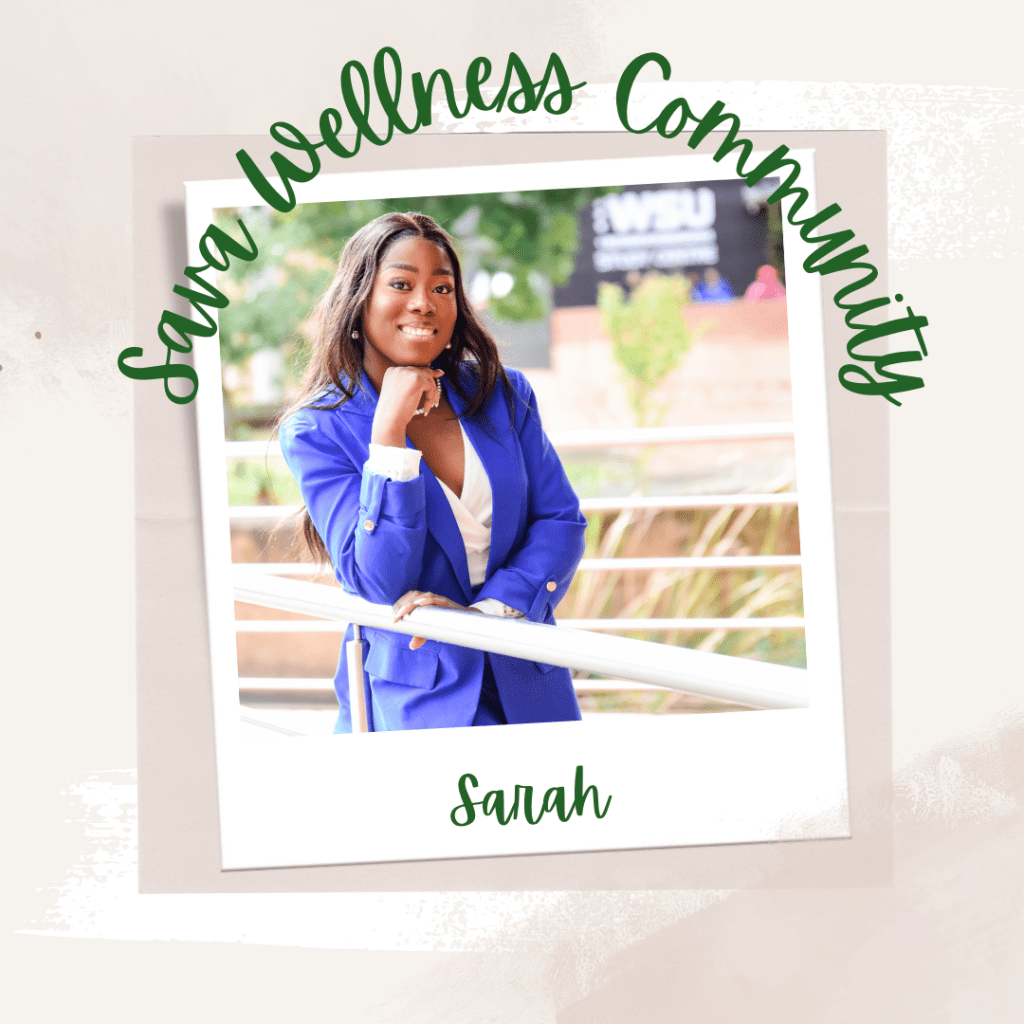
In this month’s Interview Sarah, the owner of Sava Wellness, talks with her friend Amy! They both started the intense part of their chronic illnesses around the same time many years ago. We have talked often of our illnesses and how it is important to have someone you can talk to who is going through similar situations. If you need someone to talk to about your disability/chronic illness, reach out to Sarah on the contact page!
Hi Amy! It is awesome to talk with you today. Could you please tell us a little about yourself?
I live in Calgary, Alberta. I live with my 15-pound menace of a cat named Oliver and many books. I also live near my parents, my sister, and my sister-in-law. I really like knitting, reading, and bird watching. I’m a PhD Candidate in English and I also manage an intersectional feminist literary magazine called Canthius.
Do you have a diagnosis for your symptoms? Does having a diagnosis help you?
I do have a diagnosis! I first began feeling unwell in fall of 2018 and went to my family doctor’s office where I was referred to a specialist (it would take about six months before I got an appointment at the specialist’s office, but I was very quickly scheduled for an endoscopy due to the severity of my symptoms). Through the endoscopy, I was able to get a diagnosis which initially felt like a relief—I naively thought that getting a diagnosis was going to be the hard part and treatment would be easier, but I was wrong. Ultimately, having a diagnosis does help me because I have access to the people, systems, and medications I need to manage my chronic illness, but now I know a diagnosis is the starting point and not the ending point. I’m currently in remission after three specialists, more than thirteen medications, many IV infusions, self-injections, and many endoscopies.
Have there been times when you have had conflicting advice from doctors? How do you deal with that?
I’ve definitely had some conflicting advice particularly when it came to medication (how much, when, etc.) and especially about when it was time to pull out what they would call “the big guns.” My illness had always been endoscopically categorized as mild to moderate, which never felt fully in line with the severity of my symptoms or how tricky my illness was to control. It wasn’t until I met my last (and current) specialist that my disease was categorized as severe because of my symptoms and the length of time I had been dealing with them. There is also a lot of debate about how much diet contributes to active flares/symptoms. It’s hard for me to imagine that it doesn’t contribute, so I tried some targeted/restricted diets on my own and then with a nutritionist.
If you feel comfortable, can you describe what it feels like to be on immunosuppressants?
Being on immunosuppressants is really a unique experience for everyone who takes them— I’ve spoken with friends who have been on the same medications and had completely different side effects. Over three years, I was on six different kinds of immunosuppressive medications and my body reacted differently to each one. Prednisone gave me a cortisol deposit in the form of a lump on the back of my neck and what I always describe as “dumpling legs” where my knees felt squishy and bloated. Immuran made my skin so delicate that papercuts would take weeks to heal and I got blisters on my feet that didn’t go away for five months. When I was on Vedolizumab, Ustekinumab, and then Adalimumab, I had chills after infusions/injections that I couldn’t get rid of.
Being on intense immunosuppressants was particularly difficult with the pandemic. I had to be on Prednisone in March and April 2021, which meant that I had to be even more isolated and careful. I’m still on immunosuppressants, but they’re less systemic than other medications I’ve been on. COVID is definitely still with us, so I’m still being cautious, but I feel better knowing that my immune system isn’t completely compromised and that I have up to date vaccines (I’ve had six COVID vaccines because of being so compromised).
Have there been other procedures that you have had to go through that aren’t directly related to your diagnosis?
I had to get an iron infusion because I was seriously anemic. I had been on iron supplements for months because my ferritin was so low, but my bloodwork showed that my body wasn’t able to absorb the iron I was ingesting. I was so nervous about the infusion, but it ended up making a huge difference! The infusion itself took about three hours because they need to infuse the iron very slowly. My biggest advice to anyone getting (or thinking about getting) an iron infusion is to make sure you get up and move around at least every hour. My muscles started to cramp from the lack of movement and the iron, which made standing up at the end and getting back to the car very painful.
I also developed incredibly high cholesterol for (as yet) unexplained reasons, which may be a side effect of some of the medications I had to take. Now, I’m on statins after some extensive genetic and blood testing revealed no diagnosable cause for the high cholesterol. I had to stop taking the statins when I had COVID and my next round of bloodwork showed that my cholesterol had almost doubled in the week and a half I was off my cholesterol meds. So, they definitely work! We’re still just not fully sure why I need them.
When did you first realize that you had chronic illness and how has your journey been since then?
It’s been a strange journey, especially now that I’m in remission for the first time after over three years of non-stop flaring. In some ways, I want to enjoy remission and pretend I don’t have a chronic illness because it’s easier in the moment, but then my body reminds me with fatigue, or hives, or some other signal that I have to pull back and take better care of myself. I’m not always good at pacing myself or opting out of commitments, but sometimes the body just says “no”. There’s definitely a lot of body memory and trauma which can be challenging to deal with. My family and I got very good at putting on our blinders when we needed to and just trucking along. This definitely helped me get through it as it was happening, but also means I have some things I need to work through and deal with now. I haven’t had to give myself a needle in over two years, but I still have a very strong body response when I think about it.
How has your experiences of the world changed since your symptoms started?
My symptoms started a little over a year before the pandemic started and I think both of these fundamentally changed me and the way I see the world. On the one hand, through having a chronic illness, I’ve made amazing friends (like you!) and strengthened many of the friendships I already had. Both the chronic illness and the pandemic also strained other relationships, not all of which made it out the other side. But I also found that I had a lot more strength and reserves in me than I knew I had. When I thought I was tapped out, I found that there was always a little bit more.
I also had incredible support from family and friends throughout COVID. When I was at my most compromised, one of my best friends sat outside and socially distanced in my driveway every weekend for coffee and a catchup (even through the winter). I had zoom calls with loved ones and I found that the people I was close to in my life were incredibly accommodating of my energy levels, my pandemic anxiety, and my need for masking/distancing/vaccinating/etc. I also found, though, that COVID revealed a real complacency that a lot of people have about community and community care. I remember the first few weeks of March 2020 when “we were all in this together” and people applauded for health care and essential workers, agreed to stay home to keep everyone safe, and generally supported one another, but that ran out quite quickly. The government response to COVID, the lack of testing, the convoy protests, the anti-maskers and anti-vaxxers took up so much energy and oxygen in the first few COVID years. I finally caught COVID in November 2023 and it was incredibly difficult to find accurate information about how long to isolate, how often to test, and generally what to do. Most people have decided that COVID is either over or it’s inevitable, which will always be disappointing because it’s the most isolated folks who get left behind.
Which of your symptoms do you find the most debilitating and why?
Definitely fatigue and chronic pain. For a while, I was so anemic that my vision would black over if I stood up too quickly. Fortunately, being in remission means that the fatigue is lessened (and the iron infusion helped bump up my ferritin levels), but sometimes I have to remind myself that I still have an autoimmune disease and that my body is still working extra hard and facing challenges.
What has been the most helpful for you as you have gone through this journey?
It’s been really helpful to know people who have similar challenges. For me, learning how to self-inject medication was a massive hurdle and it really helped to know people who understood what a strange process that was. It also helped to try to keep as many of my other hobbies and interests alive as I could when I was flaring and sometimes, they helped with medication side effects. I’ve always loved knitting and I learned how to knit socks when I was taking Prednisone. I felt so jittery that I needed to keep my hands busy all the time.
Now, you are a PhD candidate in English literature and part of your research is looking at chronically ill and disabled bodies. Would you like to talk about that? How does it feel to research something that is close to your own experiences? Does this give you different insight or does it make it more difficult for you to do this research because it could be triggering? You are also a creative writer; do you write about sick bodies and how does that feel?
I would love to talk about it! I talk about this all the time to pretty much anyone who will listen. My research specifically looks at the ways chronic illness and disability can intersect with Gothic fiction (I’m particularly obsessed with haunted houses). I’m working on my dissertation right now and I’m working through how the house can function as (or against) body metaphors. I re-read the Haunting of Hill House by Shirley Jackson all the time, and I’m always struck by how much the house is described as a body (i.e., the windows are eyes, the house has a heart, the house has agency). I’ve been thinking a lot about the idea of “sick houses” and what might happen when we put the sick body inside of the sick house. Do they cancel each other out? Do they make each other “sicker”? One element I’m continually drawn to is the idea of borders and how borders give us a false sense of certainty and security—we see the walls of our houses as something that protects us from the outside world and we see our skin as something that separates inside from outside. In autoimmune situations, the attacker is already inside the body. I’m still trying to figure all of this out, but the haunted house narratives I’m working with are definitely complicating my understandings of what horror and genre fiction can be.
In creative writing I find that I do write a lot about sick bodies. It’s partly for my own benefit so that I can take an experience and externalize it, which can help me process it. For example, I had a terrible experience getting an IV infusion and that turned into the creative catalyst for my master’s thesis. I also feel like it’s important in terms of representation to see similar experiences in fiction. I remember reading Baby Teeth by Zoji Stage which was marketed as a thriller, but a large part of the plot is about the main character’s chronic illness struggles. It felt strangely validating to see some of these experiences reflected in ways I wasn’t expecting and it felt refreshing to see that it wasn’t marketed as “disability fiction” or marketed to ill readers specifically.
Would you recommend any pieces of literature for people who are chronically ill and/or disabled? Or are there pieces of literature that you would recommend to people that want to learn more about people with chronic illness and/or disability?
I’ve read some really excellent literature since my diagnosis that’s helped me work through it. Here are my favourites:
Tonguebreaker by Leah Lakshmi Piepzna-Samarasinha The Two Kinds of Decay by Sarah Manguso The Invisible Kingdom: Reimagining Chronic Illness by Meghan O’Rourke Disability Visibility: First-Person Stories from the Twenty-First Century edited by Alice Wong The Collected Schizophrenias by Esmé Weijun Wang
Is there anything you would like people to know about your chronic illness or chronic illness in general?
Every day is a little bit different. It took me a long time to adjust to this and, in a lot of ways, I’m still adjusting. It’s hard when you know you can’t trust your body (unpredictability is about the only thing you can trust). I’m still learning to listen to my body and what it needs and I’ll probably spend my whole life learning this over and over again. But I’m grateful for the friendships I’ve found and strengthened when I was at my most ill, for my family, and for my own stubbornness which I’ve learned can actually be a positive thing.
Thanks Amy! You can find Amy on Instagram @amylia_leblanc
You can also order copies of her writings to see her expression of sick bodies for yourself! These links go to the publishers websites, but you can also find them elsewhere.
July is wonderful month to remind everyone that all people have varying abilities and this is what makes us unique. It is a great time for advocacy and an extra chance to get to know people who are different than you. This past month the owner of Sava Wellness, Sarah, participated in a women’s health art series!
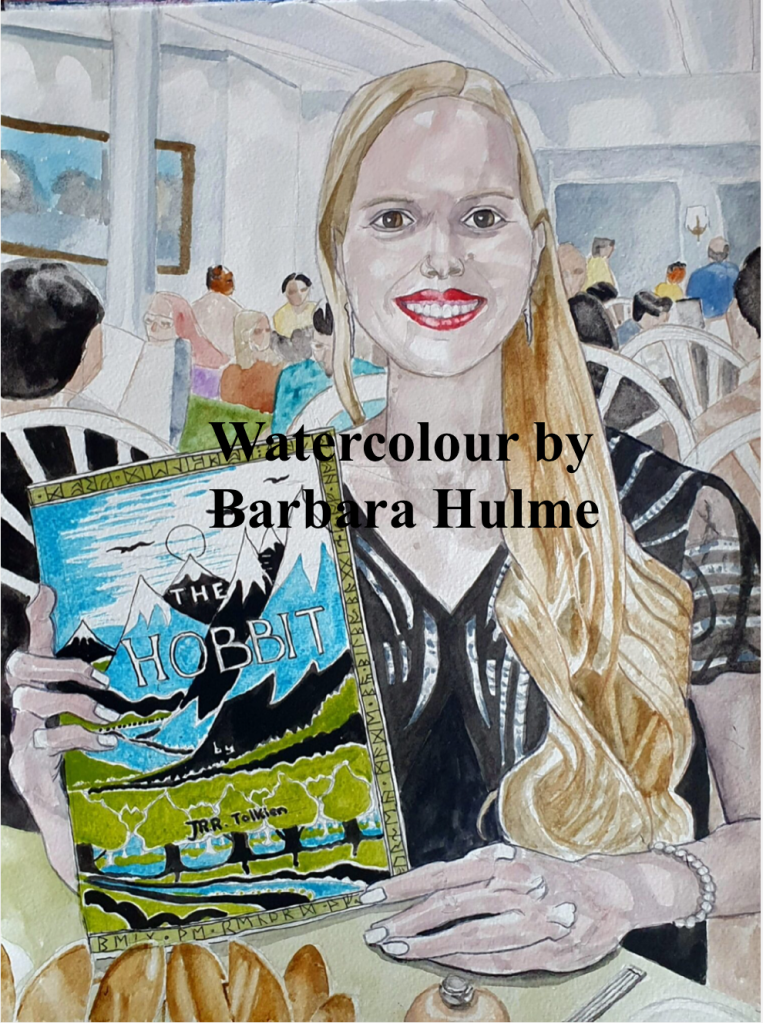
Title – Sarah – Sava Wellness – Women’s Health Series 2024
This portrait was painted in watercolour by Barbara Hulme of Manchester from photos that Sarah sent her. Here is the story that goes along with the portrait.
“My name is Sarah ☺️
My hobbies include reading (my favourite!), taking walks in nature (I am fortunate to live close to the Rocky Mountains), blogging about chronic illness/disability, and getting dressed up.
Reading is very important to me because it gives me escape and in certain books allows me to learn different things and perspectives.
When I say I enjoy getting dressed up I mean putting on a fancy dress and high heels and going somewhere nice. I can’t always do this, but when I can it makes me feel beautiful and empowered. I feel like putting on fancy clothes is like my armour, I can look “normal” and if people look at me it is because I look nice and not because they are trying to figure out if I “look sick”. I feel almost unstoppable in a beautiful dress.
At home I have day and night pjs, which with a cup of tea makes reading a wonderful experience and helps pass the days!
My favourite artist is Trisha Romance, a Canadian!
I have had chronic illness for all of my life but did not start to be diagnosed until 2017. Currently I have Lyme disease with its many co-infections and many other conditions that go along with it such as debilitating chronic fatigue.
I started a business called Sava Wellness to bring awareness to chronic illness and disability.
Sava Wellness is a chronic illness support business where people with chronic illnesses and people with visible and invisible disabilities can come to be supported. We offer virtual one-on-one appointments to provide support and strategies for navigating chronic illness and disabilities. I also doing speaking engagements to bring awareness!”
Materials – Watercolour, gouache, fine liner and pencil crayon on watercolour paper size (30.5 x 40.6 cm) unframed
Price – £639 ($814) plus package and postage
Prints – £40 plus package and postage
You can still purchase this original and it’s prints! You can do this through her website here or through her Instagram, here.
A Final Note
Disability Pride Month might only be for the duration of July, but that does not mean that we should stop advocating or stop trying to understand each other better. Keep checking in with your friends/family with chronic illness and/or disabilities.
If you would like to learn more about chronic illness/disability but don’t want to ask your family or friends, reach out and book a chronic illness/disability support meeting with Sarah for $20 where she can answer your questions.
This Sava Wellness Community interview occurs during Disability Pride Month in July. Disability Pride Month is an opportunity to get to know differing abilities better and to acknowledge that differences make us strong. Make sure to talk to people with disabilities/chronic illnesses in your life and celebrate what makes them who they are. If you have any questions about disability/chronic illness that you would like answered, you can book a Chronic Illness/Disability Support meeting with Sava Wellness owner Sarah, and she would be happy to answer your questions and help you become more comfortable with chronic illness/disability.
Hello Geri! It is wonderful to talk with you today. Could you please tell us a little about yourself?
I live in NYC. My husband and parents have been truly incredible within my chronic illness journey. My husband was my boyfriend at the time when I started to get sick. So he’s seen me at my best and worst. My favourite hobby is Netflix, currently loving Bridgerton. I love Broadway and all things Disney! I currently work full time and luckily I am able to work from home which has helped tremendously.
Do you have a diagnosis for your symptoms? If you have a diagnosis, can you tell us what it is and describe what that means for you?
I was diagnosed with lupus in July 2017 then I was diagnosed with sjogrens and non-hodgkins lymphoma in 2023.
In 2017 I began experiencing several symptoms but the first being joint pain. I would wake up really achy and stiff and had no idea what was going on with my body. I was 27 at the time and equated that with getting older and thought that it would go away eventually. But it didn’t. Soon I couldn’t open doors, write my name or do my makeup. It was even painful to just walk a few steps. I then scheduled an appointment with my pcp [primary care physician] but unfortunately since my symptoms were not visible, I was not taken seriously. She suggested exercise and stretching and if the pain got worse I should take Tylenol. She was the doctor so I believed her. I had no idea that I was being medically gaslit. But soon my symptoms got worse. I soon had shortness of breath, sharp pains in my chest, edema, and my labs were all over the place. I went back to my pcp and demanded she look into this more. Now that my symptoms were visible she took it more seriously. We ran tests until finally it was determined I had lupus. There was a lot of trial and error with my medications. There is no one size fit plan so we had to experiment on the dosage, which medications I took, etc. until we finally found one that worked for me. Fast forward to 2023, I was experiencing new symptoms of dry mouth and felt a lump in my gland. After an MRI and 2 biopsies I was then diagnosed with sjogrens along with non-hodgkins lymphoma. I did 4 rounds of rituxan [antibody therapy] and am currently on the wait and watch protocol. Later this month I will be going back for my 1 year pet scan.
Does having a diagnosis help you?
Yes. I know the reason for my symptoms and now can have a plan going forward.
How long did it take for you to get a diagnosis?
It took a few months from the start of my first symptoms for lupus. With sjogrens and non-hodgkins lymphoma it was within weeks.
When did you first realize that you had chronic illness and how has your journey been since then?
Probably the day I got my lupus diagnosis. I was told there was no cure and I would have this forever.
How has your experiences of the world changed since your symptoms started?
I definitely have to slow things down and have to be careful who I’m around. I’m also still masking and am scared everyday if I’ll get sick.
Which of your symptoms do you find the most debilitating and why?
Fatigue and joint pain. If I’m too tired I’ll mostly be in bed all day. Joint pain can be debilitating and I’ll have to take Tylenol to ease the pain.
What has been the most helpful for you as you have gone through this journey?
Having a great doctor and a great support group. During my initial phase of my diagnosis I did so much research online. No one in my family had lupus or any autoimmune disease so I turned to the internet. Thankfully there was so many resources online and social media was a great outlet to connect to other warriors. In late 2020, I decided that it was time that I began to share my story on social media and created my Instagram account. It’s amazing to see how the chronic illness community can come together and be there for one another. I’ve gained so many virtual friends and hope to meet them in real life one day. I also became a writer for lupus.net sharing my stories and tips/tricks on how to deal with lupus.
Is there anything you would like people to know about your chronic illness or chronic illness in general?
I have learned that our diagnosis does not define us and we are stronger than we think. It has been a tough road, but I continue to fight my battle and am taking it one day at a time. I know I’m stronger than my diagnosis and will get through this!
Thank you Geri! You can find Geri on Instagram @everydaylivinglupus
The month of July is Disability Pride Month! This is a month about celebrating differences and learning more about each other. This month we talk with Lacie who is a chronic illness and disability advocate, read on below to learn more about her!
Hello Lacie! It is awesome to talk with you today. Could you please tell us a little about yourself?
I am chronically ill + disabled + blind. I am from the Southern United States. My family is small and consists of my fiancé and our sweet doggie, Ella. I am an aunt to two little boys, a sister of two siblings (I am the middle-child) and I was adopted by my grandmother at the age of nine. My hobbies include baking, coffee making, and anything that allows me to be a homebody! Aside from my chronic illness, I have a bakery business that was established in 2022 called Lacie’s Loft.
Do you have a diagnosis for your symptoms? If you have a diagnosis, can you tell us what it is and describe what that means for you?
I was born with Bilateral Optic Nerve Hypoplasia, meaning I am blind in both eyes. I am also diagnosed with Dysautonomia (POTS) and the comorbidities that follows that diagnosis, such as arrhythmia, IST, MCAS, etc.
Does having a diagnosis help you?
When I was without a diagnosis, there was a plethora of dismissals. “It’s just puberty….It’s just hormones.… It’s just mental health” which only put me more at risk in the long run.
How long did it take for you to get a diagnosis?
My blindness diagnosis happened right after birth, but it took my entire childhood + teenage years, until early adulthood to be diagnosed with POTS and the following chronic illness comorbidities.
When did you first realize that you had chronic illness and how has your journey been since then?
We, my grandmother and I, knew I had been sick for a huge portion of my life, but could never pin-point “how” or “why.” I have had so many experiences that I now look back on that are so obvious that something was wrong.
How has your experiences of the world changed since your symptoms started?
Chronic illness changed my life in a paradoxical manner. It has been so hard, debilitating, and exhausting. I honestly didn’t know if I was going to be able to keep on living like this. Having online support helped uplift that feeling of despair. I have now interacted with thousands in the chronic illness community that have changed my life for the better. Although it’s still so incredibly hard, and I would do anything to change my outcome, being able to be an advocate has uplifted my life in indescribable ways.
Which of your symptoms do you find the most debilitating and why?
My most debilitating symptoms are: fatigue, tachycardia, adrenaline dumps, syncopal episodes, and temperature dysregulation. I experience these symptoms every single day and they never get easier.
Syncopal episodes (both pre-syncope + syncope, itself) is presented with near-fainting and/or fainting. When this happens, I lose my ability to hear, see, and speak. Syncope episodes can take either seconds or minutes for me to regain consciousness— and after an episode, I feel really warm, sweaty, tingly, thirsty, confused, and have tremors. When this happens, it is best for me to stay laying down, elevate my legs, and replenish with electrolytes. It may take several hours for me to feel good enough to stand up. These episodes are scary, especially when out in public and/or alone. The summer heat amplifies my episodes.
Can you describe what a bad day symptom-wise looks like to you?
A bad symptom day consists of me being wrapped up in a blanket on my couch, snuggling with fur-companion, Ella. I always have a fan blowing towards me. There will be a comfort show turned on the TV, plus snacks + water bottles in arms reach.
What has been the most helpful for you as you have gone through this journey?
The most helpful part of my chronic illness journey has been interacting with others that truly understand what I am going through with overall love and support.
Is there anything you would like people to know about your chronic illness or chronic illness in general?
If I could teach others about my condition(s) I would mainly focus on the reality of Dysautonomia (POTS.) It is a debilitating illness that consumes the entire body, with a wide range of symptoms. I would also want others to know about Optic Nerve Hypoplasia, the cause of my blindness. Blindness ≠ Blackness. Just because someone is blind does not mean that they only see nothingness. Only a very small percentage of those in the world who are blind see total “nothingness.” Blindness is simply a spectrum.
Thank you Lacie!
You can find Lacie on Instagram @lacielajoie and find her bakery business on Facebook at Lacie’s Loft – Homemade Baked Goods. Lacie has a home based bakery called Lacie’s Loft. She is a self-taught baker and established her bakery in 2022. There are 20+ cake and cupcake flavors to choose from on the menu!
The Sava Wellness community interview for this month we talk with Sarah (she/her) from South Africa. Sarah has a unique perspective on her sickle cell disease because of her lived experiences and because she is a doctor. Read on below to learn about sickle cell disease and Sarah.
Hello Sarah! It is great to talk with you today. Could you please tell us a little about yourself?
I live in South Africa in the Gauteng province. I stay together with my sister. My favourite hobby is baking (if only I had more time). I’ve started getting into knitting and crocheting, we’ll talk more once I’ve made my first blanket. I’m a medical doctor currently doing my second year of internship at Chris Hani Baragwanath Hospital. I am also an advocate for sickle cell disease.
Do you have a diagnosis for your symptoms?
I have sickle cell disease and was officially diagnosed at 6 months of age. I’ve been aware of my medical condition since childhood, but it was only in my early adulthood that I understood the impact this diagnosis had on my life, of which I then learnt to accept this condition.
How has your experiences of the world changed since your symptoms started?
During the early years of my life, I was discriminated against, particularly by the healthcare system. It was frowned upon and poorly understood how a young child/teenager could present in the ED with so much pain without having any signs of injury. “The crying is surely just for attention”. “Is it really a good idea to give anything stronger than paracetamol?”. My worst experience was being unattended for a solid 10 hours while having a major crisis because the nursing staff didn’t see my condition as urgent. It’s only now as an adult, along with the title Dr, that I’m suddenly treated with more respect and appropriate care. Interesting how the world works. And yes, you might find it odd that I decided to choose a career in the very same system that has let me down countless times. But I believe that through my experiences and role as both patient and doctor, will help me be the voice for the unheard and hence advocate for patients like myself with sickle cell disease.
Which of your symptoms do you find the most debilitating and why?
I think the symptom that any person with sickle cell will find the most debilitating is an acute pain attack that we refer to as a crisis. A crisis is severe pain due to sickling of red blood cells and lack of oxygen. The pain can be felt in any part of the body. I personally have been in ICU a couple of times because of a major crisis. In that state, I am unable to do anything for myself; I cannot walk, I cannot eat, I struggle to sleep, I cannot even bathe myself. I do however feel, contrary to popular opinion, that the symptom that affects me the most on a daily basis is the chronic fatigue. Apart from my physically taxing job, chronic fatigue does prevent me from doing certain things I wish I could do with ease.
Can you describe what a bad day symptom-wise looks like to you?
A bad day for me symptom-wise is usually when my blood level starts dropping. I become extremely tired, even walking a short distance is challenging. Another bad day for me is when I go to bed anxious because I just have a feeling I might have a crisis even though I might have slight to no pain at all.
When you have a good symptom day, what do you like to do?
A good symptom day is usually after I’ve had a blood transfusion. For a couple of days, my energy levels are up. I like to take advantage by either going to the gym or meeting up with friends.
What has been the most helpful for you as you have gone through this journey?
Definitely the support from family and friends. I definitely could not go through this journey alone as it is just too much for one person to bear. I’m more than grateful for the community around me.
Is there anything you would like people to know about your chronic illness or chronic illness in general?
A big misconception is that sickle cell disease is a rare illness, however, it is actually one of the most common blood-related disorders. The main reason is that it is poorly recognized and is considered a disease found in western or central Africa only. Recent statistics on sickle cell will show that the number of people living with sickle cell disease globally has increased from 5.46 million in 2000 to 7.74 million in 2021. Sickle cell is not a “black man’s disease”. Immigration is one of the main reasons why sickle cell is spreading around the globe, and even though people of colour make up the majority, as long as you have the gene, any race can be affected.
Thank you Sarah! You can find Sarah on Instagram @fight_of_a_lifetime and at Facebook here.
The Sava Wellness Community interview for this month occurs during Autoimmune Disease Awareness Month, in March. In this interview we talk with Vivian (she/they) from USA. Vivian has the autoimmune disease lupus. Vivian speaks to the different, and wide ranging, symptoms of lupus, other concurring conditions like sciatica, and her experiences with body dysmorphia.
Once again, you can follow @chronicloveclub on Instagram as they posted the entire month about Autoimmune Disease Awareness Month and different autoimmune diseases to learn more.
Hello Vivian! It is wonderful to talk with you today. Could you please tell us a little about yourself?
I live in Minneapolis, MN. I have a three year old cat named Milo. He is very attached to me, and overall he takes care of me as much as I take care of him. Even on my worst days he forces me out of bed to go outside when the weather is nice; otherwise he’ll curl up next to me the whole day. I’ve had Milo all three years he’s been alive and seeing his personality just grow is beautiful. He’s very active and vocal when the time calls for it. He can be a jokester at times, which brightens the mood around the house. He’s a beautiful, gentle, big soul that I wish more people got to experience outside of my Instagram. Currently my hobbies include listening to music/dancing, writing, and Facetime with friends. I am trying to get back into knitting again but that’s going to take a lot of energy and patience. I did start a book… so we’ll see where everything takes me this year; I have high spirits that one of my aspirations will come to fruition; God willing!
Do you have a diagnosis for your symptoms? If you have a diagnosis, can you tell us what it is and describe what that means for you?
My diagnosis includes lupus as the main with left sided sciatica among other diagnoses. Lupus is a chronic autoimmune disease where the immune system attacks everything including healthy cells; meaning no part of the body is left untouched by this illness that causes immense inflammation and pain in the body. Sciatica is pain that travels through the sciatica nerve that goes through the buttocks down each leg and usually happens when there is a herniated disc that puts pressure in the nerves in the back and that’s essentially where the pain starts as well; it mostly impacts one side of the body.
Honestly, I have not come to terms with any of the diagnoses I have because they’ve all happened one after another without giving me too much time to digest what one means for me or what that could mean for my life overall. I go through the cycles of denial and anger a lot when it comes to the stages of grief. It’s hard and I try my best to just look at the blessings in my life to give me meaning as to what life truly consists of, and that’s lots of love, Grace, and acceptance. One day I’ll come to acceptance, but first I need to work on giving myself more Grace and love.
Does having a diagnosis help you?
Yes it does. I cannot imagine having to go years being gaslit as chronically ill individuals are before and even after diagnosis. It helps me to have a diagnosis because then I don’t have to keep wondering or be anxious more than I need to be about what’s happening to my body. It doesn’t solve anything to have a diagnosis yet, it’s a more reassuring feeling to have a final diagnosis though; I just wish there was a cure for lupus and these other chronic illnesses. Yet, I am thankful I have a final diagnosis, I know for some it can take about 3-7 years to get a final diagnosis such as lupus itself. Makes sense though as lupus is also called the “mystery illness” because of how well it can mimic other autoimmune illnesses.
How long did it take for you to get a diagnosis?
It took about 3-4 months to get an official diagnosis on my lupus and about 9 months to get a diagnosis on my sciatica. My lupus was very equally systematic because at times I was having difficulties breathing as well as it was presenting physically with water boils, lesions, and swelling, among other symptoms. Hair loss was also another factor that led to my diagnosis. I got diagnosed by dermatology and then rheumatology also had the second final say that it truly was lupus through blood work and communicating with my dermatologist at the time.
When did you first realize that you had chronic illness and how has your journey been since then?
I gaslight myself often that I do not have a chronic illness or am disabled in some way, however the first time I realized I was disabled was in October of 2021 when I was in indescribable pain for no reason and couldn’t even walk, let alone stand by myself. That was when I realized I was indeed disabled, and although it was physical for me it doesn’t help that I continue to gaslight myself; it’s not until I’m using my cane to help me be more mobile that I acknowledge that I am disabled. Or when I have intense flare ups is when I know that I’m disabled because they cause a disruption in my days that all I can do is lay down and “rest”. Invisible illnesses such as lupus can make it easier to gaslight yourself on those days you feel better than usual, those days where you accomplish more on your to-do list. Yet, as my pain psychologist and other providers say to me, I need to go easy on myself, just because I am feeling good that day does not mean I have to do everything under the sun. My rebuttal becomes “well, I don’t know when the next time I’ll feel this good again” and they say that’s okay, it still doesn’t mean I have to do everything and push myself to the limit. That helps me acknowledge my invisible disability a bit more that I can’t do it all just because I feel good. Things can wait. I need energy for the following days too to get out of bed at least, if you know what I mean!
How has your experiences of the world changed since your symptoms started?
My experience in this world has changed dramatically, it’s as if I’m seeing people for who they are for the first time. This world is very cruel and not understanding towards those who are disabled; a lot of individuals when thinking about the perfect utopia, they never include or even think twice to include those who are disabled which shows that we don’t have a place in this world. I was inclusive prior to me becoming disabled, however now I’m even more inclusive where people with disabilities are the first group that I include rather than them being second thoughts because at any point any of us could become disabled. That’s another thing that changed my perspective on the world, that at any given moment, anyone can become disabled whether it’s temporary or long term, it can happen at any time to anyone, so let’s all be kind to one another whenever we can and be inclusive to everyone especially those who are disabled; it makes the world a bit better and easier for those of us that are disabled/chronically ill long term.
Which of your symptoms do you find the most debilitating and why?
Is it the skin issues where I feel like my skin is burning alive and there is nothing I can do about it or is it the indescribable pain I experience at times that has pain spasms on top of that? I think the pain takes the cake on the most debilitating. When I am experiencing joint, muscle, and nerve pain all at once it feels like my body is slowly being cut apart and I’m just watching it being cut without having anything I can do about it. It causes me to not be myself, because pain causes people to lose who they are that they become almost angry and I don’t like that it also affects my emotional and mental wellbeing.
Can you describe what a bad day symptom-wise looks like to you?
Waking up in excruciating pain, not being able to walk to the bathroom let alone down the stairs. Migraines the whole day that I cannot get comfortable at all to sleep. My skin is also peeling and blistering and it causes an additional burning sensation all over my body that also increases itching because of the blistering, however I cannot scratch those areas. Lastly, is having mouth sores that hurt so bad I can’t even drink water or brush my teeth. Bad symptoms days cause havoc in my brain because what do I target first? Where is the root fire to ease most of these symptoms? It’s quite a battle when you have multiple symptoms that last weeks/months.
When you have a good symptom day, what do you like to do?
Literally I just like to stay hydrated and rest even if that means just laying in bed with my ice packs or heating pad. I usually will just listen to music or have a show like ‘The Office’ in the background playing as I surf the interwebs. I like to also just cuddle with my cat when he allows me to, because they have a mind of their own. I also dance around my room to music, that’s kind of my workout because it stretches not only my back but my legs too and arms. This helps with my stretches not being so intense also afterwards.
What has been the most helpful for you as you have gone through this journey?
God; He has truly been my rock. I have faith as small as a mustard seed. Each day I pray to God to show me blessings each day especially with my health because most times with lupus it gets very very lonely and difficult. Having the reminder that I’m still blessed to walk even if it’s with a cane, or that my eyes are still functioning because some lupus medications can cause eyesight problems. It’s really the small things, such as seeing my cat Milo get excited to go outside and roll in the grass, that brings me immense joy. So I pray to God to show me blessings each day that I get to enjoy and therefore even though my faith is as small as a mustard seed, God accepts that and shows me why he will never leave me nor forsake me. Deuteronomy 31:8 and Romans 12:12 have really guided me so far in this journey. Daily prayer is the key.
Is there anything you would like people to know about your chronic illness or chronic illness in general?
Chronic illness in general can bring a lot of self-esteem issues that people don’t seem to understand. Body dysmorphia becomes a big factor at certain stages of the illness such as lupus where it can alter your skin that scars show up. I have scars in certain areas of my body that at one point used to be very open and very visible. They brought me down on how I felt about myself because of the placement and visibility. Having uplifting friends who pour lots of love into you, not just physically, but emotionally especially through prayer, that helps the self-esteem escalate. I also suffer from moon face with high doses of prednisone. The weight gain because of the water weight can mess with the brain because sometimes it literally happens overnight. It can cause a feeling of uncomfortableness in the body and lack of self-esteem. During those times I don’t like to go outside too much because of the sudden nature of the moon face and prednisone weight, it can heavily impact your mind, causing body dysmorphia to showcase. It’s a cycle and can be very difficult depending on how severe the illness is in my body during that time. Be kind to yourself, giving yourself grace especially with skin issues, hair loss, and weight gain that is outside of our control, lupus warriors. Having friends who shower you with love, especially in those times, encouraging you yet not dismissing what you are going through can help ease the mind. Support matters.
Thank you Vivian! You can find Vivian on Instagram @nnaifiv
This month Sava Wellness has expanding its offerings and there are now many more services to book! Each service is done virtually allowing far-reaching access! Listed below are all the services and the descriptions. If you would like more information, you can ask questions, book a service, or book a free initial consult, send me an email.
Sava Wellness Services: Reiki – 30 mins ($60) Soul Spirit Animal Reading – 20 mins ($60) Intuitive Healing – 60 mins ($135) Subscription Program – $8/month Speaking Engagements
Reiki – 30 mins ($60)
Reiki is an energy healing system that uses Reiki (a universal healing energy) to balance the energy within the body system. Reiki is a great system for overall balancing, but also very effective at reducing pain and discomfort in specific areas. Reiki can help with many physical health problems, including chronic illness and disability, and can also give the recipient energy to decrease fatigue. This can be done through a video call or by scheduling a time that works best for the Reiki to be sent to you. Indicate in your email which you would prefer, both will still need a booking time.
Soul Spirit Animal Reading – 20 mins ($60)
This is an intuitive reading of your soul’s spirit animal. Your soul spirit animal reveals information about yourself that you may not have consciously known. Your spirit animal gives you a representation of yourself and helps you to see your power and your challenges. In the session you will be able to learn about your soul’s spirit animal and learn more about yourself through the knowledge that you gain. Included is a visual representation of your spirit animal once the session has ended.
Intuitive Healing – 60 mins ($135)
Intuitive healing uses the understanding that everything in the universe is made up of energy and is connected. Realizing this connection allows intuitive and energy healing practices. Intuitive healing goes beyond energy healing practices, like Reiki, getting to the root of your problems (physical, mental, spiritual) and removes them. Sarah uses ThetaHealing predominately, and other practices, such as Reiki, in intuitive healing sessions.
Subscription Program – $8/month
This is a curated tool box of mental exercises and different techniques which Sarah found helped her on her healing journey. Examples of these techniques include: learning how to ground yourself; guided visualizations to decrease frustration or the feeling of being overwhelmed; and how to become peaceful before sleep. The monthly subscription is sent on the last day of every month.
Speaking Engagements
These engagements can either be one hour, two hours, or half day events. Sarah can speak on multiple different topics including, but not limited to: what it is like living with a chronic illness/invisible disabilities (motivational), the challenges of living with chronic illnesses in society and in the workplace, how to make the world more inclusive for people with chronic illnesses and disabilities, how to support people with chronic illnesses and disabilities, how to interact with people with chronic illnesses and disabilities (i.e., what not to say, what to say, etc.), and many more! To learn more, contact Sava Wellness and ask for an informational package.
This month for the Sava Wellness Community interview series we talk with Tori (she/her) from USA. Tori speaks about her experience with a rare disease, HsAN. When this interview was posted, it was February which is Rare Disease Month to bring awareness to rare disease, which according to the World Health Organization is a disease that affects fewer than 65 in 100,000 people. To help with this month you can advocate for people with rare disease to have a voice and their story heard, but you can also donate for research to be done. You will read below that Tori helps advocate with the HsAN Foundation, and at the end of the article you can visit the website to learn more about how to be a rare disease ally. Additionally, you can follow @chronicloveclub on Instagram as they posted the entire month about Rare Disease Month and different rare diseases.
Hello Tori! It is great to talk with you today. Could you please tell us a little about yourself?
I live in Minnesota, USA. I like to do puzzles and listen to Elvis Presley and Jeremy Camp. My mom has been really excellent in caregiving and assisting in my healthcare. I spread awareness about ostomies and my condition, I’m a guest speaker at my former high school to juniors and seniors in a CNA class, and I’ve been working with HsAN foundation to promote the foundation. The HsAN Foundation was founded to spread awareness and fund gene therapy research for those affected and find a cure/treatment for HsAN. There are only 300 people worldwide living with HsAN.
Do you have a diagnosis for your symptoms? If you have a diagnosis, can you tell us what it is and describe what that means for you?
I have HsAN and that means I need to watch out for injuries as I don’t feel pain, I need to be in a temperature controlled environment 24/7, I have to keep an eye on the weather, and more. HsAN stands for Hereditary Sensory and Autonomic Neuropathy aka Congenital Insensitivity to Pain with Anhidrosis. I can’t feel pain or temperature, can’t sweat, have hydration issues, can’t regulate my body temperature and more due to HsAN. It’s usually caused by the NTRK1 gene mutation but some don’t have a known gene and mine was caused in utero. I do have a genetic mutation of uncertain significance/SPG11 and it causes autism, intellectual disability, and peripheral neuropathy. I need to be in a temperature controlled environment because I can’t sweat and I overheat easily. When it’s cold my skin gets pale and blue-like and it’s hard to warm up. When it’s hot my skin gets flushed, I get tired, pass out, itchy, and more. I don’t do well with heaters either as they can make me overheat too, so I have to have the heaters on low. I have the temp on 71ºF during the day and 66ºF at night.
Does having a diagnosis help you?
Yes it does.
How long did it take for you to get a diagnosis?
19 years.
When did you first realize that you had chronic illness and how has your journey been since then?
When I was younger I knew I could never feel pain and I never have been able to sweat either or feel temperature. My journey has been uphill and downhill since then as I had a 6 year health decline when I turned 18. I have needed to get 3 medical devices to help me live and function; an ileostomy, urostomy, and an implanted port. My autonomic issues have worsened since age 18 (bladder and bowel issues worsened, hydration worsened, overheating, malnutrition, slow transit constipation, borderline gastroparesis, pelvic floor dysfunction, prone to a lot of injuries and infections, and more). My overheating issues worsened around age 16.
How has your experiences of the world changed since your symptoms started?
I have never known any other kind of life. My medical challenges have brought me closer to God. I can now advocate for others with ostomies and HsAN. I get different opportunities now. I’m a double ostomate as a result of complications of my HsAN. I had a neurogenic bladder, small bladder capacity of 100mL, urinary incontinence without sensory awareness (have never felt when I needed to go to the bathroom, never toilet trained and always went on a timed schedule), slow transit constipation, borderline gastroparesis, and pelvic floor dysfunction.
Which of your symptoms do you find the most debilitating and why?
Not being able to feel pain and not being able to sweat because I always need to be on the lookout for injuries, be extra careful, never know what’s wrong, and I always have to keep an eye on the temperature as I don’t feel it and I can’t regulate my body temperature either. Not being able to sweat causes difficulties because I can’t cool myself off naturally so I use a neck fan and an ice vest when needed. I stay in a temperature controlled environment 24/7 which helps to regulate my body temperature. Since I don’t sweat I can’t regulate my body temperature. I have sweat glands but they don’t function and I got the lowest percent on the Mayo Clinic thermoregulatory sweat test that they’d ever seen.
Can you describe what a bad day symptom-wise looks like to you?
Overheating, not getting my fluids after a certain amount of time which for me means I can’t walk or talk, very sleepy, not aware or present, an infection, a bad injury that was discovered too late and more. This is due to my HsAN and is a treatment to manage it. I can’t walk or talk when I don’t get IV hydration because I dehydrate very easily and my symptoms are head pressure, trouble walking, trouble talking, slow moving, not aware or present, tachycardia and wonky vitals.
When you have a good symptom day, what do you like to do?
Puzzles, watch Netflix, devotional, color, read the bible.
What has been the most helpful for you as you have gone through this journey?
My faith (I wouldn’t be where I am today without God), my church family who has prayed for me and rejoiced with me, and my wonderful support system.
Thank you Tori! Tori is an advocate for her chronic illnesses on her Instagram page @toris.medical.journeyTori also advocates for the HsANFoundation, you can visit their website at https://hsaniv.org
Tori’s condition is a great example of how quickly and drastically people’s situations can change when they have chronic illness. In the last month Tori’s condition has got worse. HsAN causes Tori’s immune system to be compromised and it is a degenerative condition. She has three highly resistant central line infections in her port. Her health team has changed her medical plan many times, and her hopes of moving out cannot happen at this time because her medical issues are a full-time job. Tori is trying to do her best with the continuously changing situation.






 Sava Wellness