
Category: Uncategorized

  • Siena 🤍

    In this month’s interview we talk with Siena (she/her) from Toronto.

    Hi Siena! It’s great to talk with you today! Can you please tell us a little about yourself?

    Hello everyone, I am Siena (she/her)! I am 23 years old living in Toronto, Ontario. I am currently working on my masters in counselling psychology. I identify as someone who deals with chronic illnesses and have been since I was born premature with my twin sister; born 2 months early. Luckily my twin sister does not deal with health challenges but instead it came my way :)! I try to view my health as it has shaped me into the empathetic human that I am today. I have a bunny who is my everything, she makes me smile on my bad symptomatic days with her funny personality. I have found a hobby in reading, this year so far I have read 40 books. I have also fell in love with colouring. Both colouring and reading help clear my head away from both my health, school and just life. 

    Do you have a diagnosis for your symptoms?

    In terms of diagnosis I have quite a few. When I was born the doctors found a hole in my heart. I had that closed at aged 5. I also had a hemangioma (a non-cancerous face tumour) grow on my face so I had to have 5 surgeries to remove that as I had cell regeneration which my surgeon has never seen in my given face location. I was also born with low muscle tone. I crawled instead of walked and started walking at age 3. I was equal speed crawling as my sister was walking! I got really confident in my crawling skills!!! After dealing with those things, everything calmed down until around my teenage years, when I was diagnosed with PCOS, scoliosis, hyperparathyroidism, kidney stones, ocular migraines, and IBS.

    To me PCOS, which is polycystic ovarian syndrome, is a syndrome that is characterized by a hormonal disorder affecting everyone at different rates due to the large range of symptoms. For me it includes weight change, irregular or non-existent period, and high testosterone leading to increased body hair. It’s a disorder that I feel is very underestimated and under looked but affects so many beautiful people. 
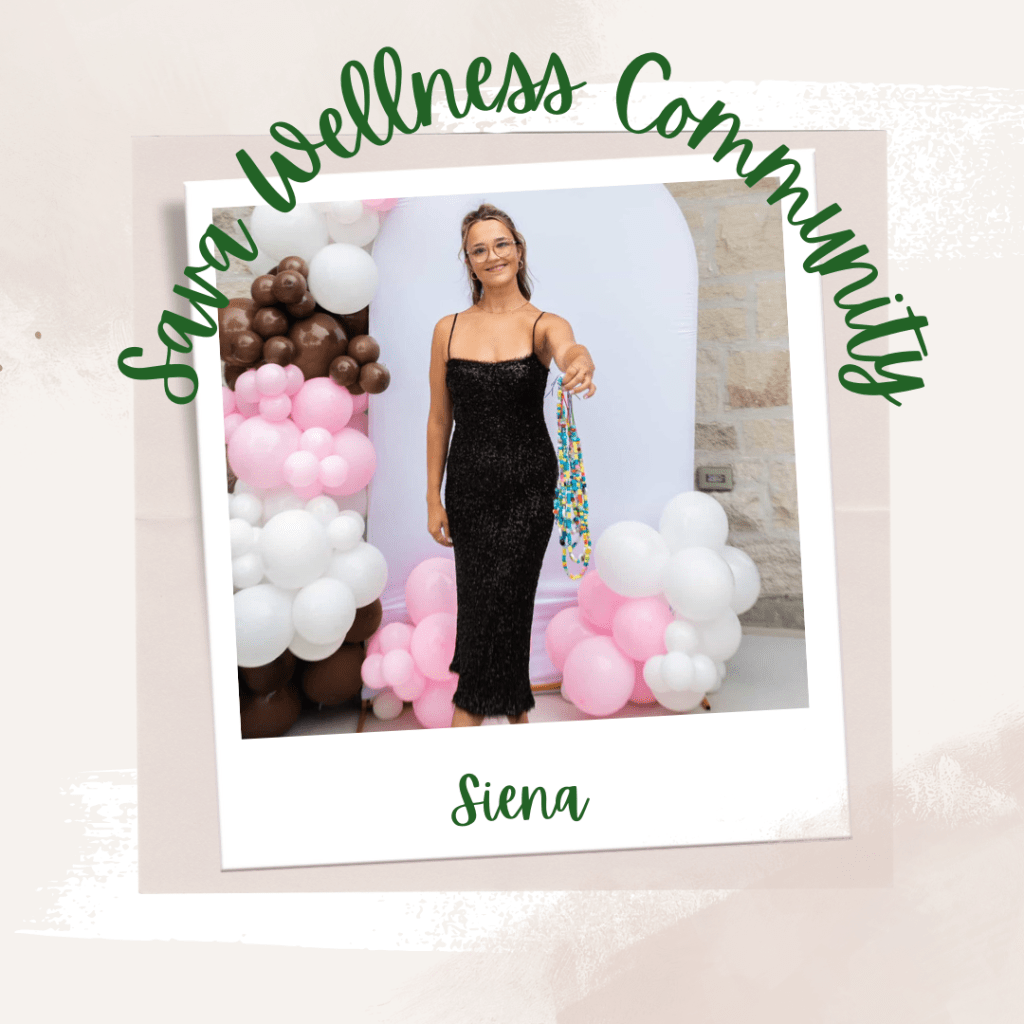
    The words “Sava Wellness Community” are written in green cursive script over top of a polaroid picture. The polaroid picture is sitting on top of multiple layers of pink, cream, and white watercolour background. The polaroid picture has the name “Siena” written in green under it. Siena is wearing a sparkle black dress in front of a background of balloons. She is holding strings of multi-coloured beads.

    Additionally, I ended up also being born with a head tilt due to a nystagmus (constant eye shake), at the age of 17 I had my first eye surgery. It was a double eye surgery and the biggest surgery my eye surgeon has ever had to perform (he was a veteran surgeon!) and a surgery I wasn’t exactly prepared for. I ended up getting double vision from the surgery that was supposed to be temporary, but after weeks it was still there. I had another surgery to correct it but things visually were still not great. I ended up getting referred to a surgeon in Akron, Ohio, USA. I ended up having 3 more eye surgeries in the States with a total of 5 eye surgeries. They were very invasive and sort of traumatic which has now landed me with medical PTSD. While in the realm of mental health, I have also been diagnosed with anxiety, depression, and recently diagnosed with ADHD. 

    In terms of my eye surgery I had it because I grew up with a large head tilt. My normal 90 degrees was me looking almost up and I felt like a giraffe and we knew it may lead to potential neck problems down the road that seemed very daunting. 

    How long did it take for you to get a diagnosis?

    Getting the diagnosis at 16 was yet just another diagnosis not realizing the impacts it would have on me as I started my early 20s with major weight gain and hormone fluctuations.

    Which of your symptoms do you find the most debilitating and why?

    My current symptoms that I am finding the most challenging would be my inability to workout leading to awful migraines and my body reacting so sensitively but also the constant fatigue – feeling like a zombie. 

    When did you first realize that you had chronic illness and how has your journey been since then?

    While dealing with all of this I feel my health has always been a major part of my life. I try not to let it define me but on days it definitely does. With raging fatigue living what people call a regular life can definitely be very challenging. Additionally, having multiple appointments pretty much weekly feels like its own job that I don’t get paid for haha. I would do anything right now to work a job, but I also understand my health is my top priority and ensuring I am healthy for myself but also for my future clients as I start my psychotherapy career is essential. In the 23 years I have never struggled with health burnout until now. Those weekly appointments and daily symptoms of fatigue, feeling almost like a zombie, and migraine headaches that also come impacting my vision and productivity, those combine to make life a little more challenging. But I am embracing that I have a huge team behind me whether that be my family, my mum and dad, my sister, my large team of doctors, my friends, my boyfriend, as well as my health account on Instagram @sienashealthstory where I have found the most amazing people who also deal with health challenges who all motivate me, allow me to grieve those bad days, lift me up when needed, but also support me whenever I need it. 

    How has your experiences of the world changed since your symptoms started?

    Since my health has been my whole life I don’t know much without it. But I take every day as it comes. I try to implement strategies to reduce burnout like journaling, colouring, reading, listening to music, petting my bunny, and enjoying the fresh air whenever I can. 

    What has been the most helpful for you as you have gone through this journey?

    I wanted to create a health account for both myself but for others. I wanted to feel less alone in my journey – I love and appreciate my support system but it was also a challenge being the only one with health issues so there are definitely areas that people without CI [Chronic Illness] would not understand. I also wanted to share my journey in hopes of others not feeling alone. I am going into psychotherapy so I am going to slowly transition my health account that encompass me and my health journey while also integrating therapeutic ideas while not giving medical advice. 

    Is there anything you would like people to know about your chronic illness or chronic illness in general?

    If you are in a similar situation or dealing with challenges relating to your physical or mental health, I see you and I hear you. I am always a message away. I love chatting about my health and looking on the positive side of things. Trust me I could go down a negative spiral but looking on the positive side helps me keep up the motivation to keep on moving forwards. 

    Thank you all for reading my story. If you have any questions or want to connect please don’t hesitate to reach out to me at @sienashealthstory on Instagram

    Take care ❤

    Siena McLaven

    Thank you Siena!
    You can follow along with Siena on Instagram @sienashealthstory
    She is also an advocate for the St. Michael’s hospital in Toronto.

  • Ally 🌵

    In this month’s Sava Wellness Community Interview Series we talk with Ally from Arizona. 

    Hi Ally! It’s awesome to talk with you today! Can you please tell us a little about yourself?

    I live in Arizona. I live at home still due to my chronic illnesses and disabilities, with my parents and younger brothers. We have two wonderful dogs.

    My favorite hobbies are simple arts and crafts such as small diamond art projects, sticker by number, embroidery, coloring books, wood painting kits, and making bracelets. I also enjoy reading physical books and audiobooks, building botanical LEGO sets, and journaling. 

    The terms I like to use in relation to my illnesses/disabilities are: chronically ill, disabled, and person who is chronically ill. Additionally—autistic instead of person with autism (goes hand in hand with disabled). I used to describe myself as invisibly disabled in addition to the terms above; however, as my health has progressed, I am no longer invisibly disabled due to my medical devices.

    I’m unable to work due to my chronic illnesses and disabilities. Being sick and disabled truly is a full-time job. For the past year, I’ve been on SSDI. SSDI is one of our forms of disability benefits in the United States. It’s a long process to obtain and typically requires “work credits,” meaning that you pay into the system. If you have a parent on SSDI, you can be granted it instead of SSI. It stands for Social Security Disability Insurance, while SSI is Supplemental Security Income. 

    Do you have a diagnosis for your symptoms?

    My primary diagnosis is a primary mitochondrial myopathy with associated carnitine deficiency. It is considered to be a life threatening progressive neuromuscular disease that has the potential to affect every organ system. For me this means that currently my biggest related symptoms are muscle pain, muscle weakness and hypotonia, weakened respiratory muscles, a variety of severe GI issues, severe fatigue, and exercise intolerance. This diagnosis comes along with many comorbidities for me; my other chronic illness diagnoses are gastroparesis, intestinal dysmotility, asthma, chronic migraine, idiopathic bladder paralysis, orthostatic intolerance, and osteoarthritis. Outside of my physical health, I am autistic and have cortical visual impairment (CVI). 

    Does having a diagnosis help you? 

    It is very important for me that I have an overarching diagnosis because it gives context for my symptoms. Being that mitochondrial diseases are progressive by nature, it unfortunately makes sense when my health declines or when I am diagnosed with an additional condition. I have an internal validation knowing that there is a main cause for my symptoms. With many of my diagnoses, especially my mitochondrial disease and gastroparesis, I have been able to find supportive communities of those who understand what I have experienced. 

    The words “Sava Wellness Community” are written in green cursive script over top of a polaroid picture. The polaroid picture is sitting on top of multiple layers of pink, cream, and white watercolour background. The polaroid picture has the name “Ally” written in green under it. Ally is smiling and hugging a donkey and is wearing a pink Mickey and Minnie Mouse t-shirt. She is wearing glasses and has her brown hair tied back with pink clips. Ally is wearing a necklace and is sitting in a wheelchair.

    How long did it take for you to get a diagnosis?

    I was a newborn when I was diagnosed with a mitochondrial disease. The other diagnoses have come throughout my life at various times. Gastroparesis and intestinal dysmotility took the longest to be diagnosed. I began experiencing severe GI symptoms in late 2020, but was not officially diagnosed with gastroparesis until late 2023 and intestinal dysmotility until mid-2024. 

    If you don’t have a diagnosis, can you please describe your symptoms? 

    Despite having a diagnosis, I still have undiagnosed symptoms. These include joint subluxations, hyper mobility, unexplained easy bruising, recurrent infections, skin flushing, and skin reactions to almost every adhesive. 

    When did you first realize that you had chronic illness and how has your journey been since then?

    I’ve been sick since birth; I feel like I’ve always known in some capacity. At the age of 15, my health quickly declined and this started the journey towards the diagnosis of gastroparesis, intestinal dysmotility, and orthostatic intolerance. Things have always been up and down with me health-wise. 

    How has your experiences of the world changed since your symptoms started?

    Through the years, I’ve needed to rely on medical devices to stay alive. In 2022, I had surgery for a colostomy. In 2024, I had my first GJ feeding tube placed after years of drinking various supplements and formulas. Medical devices are scary, to say the least. They represent more than just attachments to my body—they come with trauma, grief for the body I once had, resilience, profound gratitude, and so so much more. My GJ tube and ostomy have taught me the value of my life, and that I’m worth fighting for. With my health progressing and my symptoms becoming more visible to others, I’ve forever had my experiences of the world changed. I’ve had to learn to NEVER take a good doctor for granted. They are hard to come by. The medical system has both broken me and built me. It’s taught me to advocate for myself and those around me, which is a skill I’m continuing to work on. Being sick teaches you about humanity. You learn the limits of other people’s empathy—who will stay, who will silently disappear, and who will come into your life in the most needed moments. You learn about the lack of accessibility in everyday life, and recognize those who fight for solutions and make space for everyone. The quiet kindness of bystanders; those who make you feel less alone in ER waiting rooms, hospital cafeterias, PT offices, and labs. You become more observant to stranger’s suffering, but also to their wins. My world view will never be the same, and my experiences are forever changing. 

    Which of your symptoms do you find the most debilitating and why?

    The symptoms I find most debilitating are fatigue, muscle weakness, muscle pain, nausea, constipation, and abdominal pain. Fatigue is the worst for me. I sleep an average of 12 hours each night and spend an average 4 hours of resting in bed during the day. Muscle weakness significantly limits my mobility outside of my house as well as with exercise. I am an ambulatory wheelchair user, and usually cannot walk more than 1/4 mile. Over the past few years, I’ve had to rely on my wheelchair more often when outside of my house. Emotionally, this change has been hard. I am forever grateful for my wheelchair, that gives me independence and access, but still grieve for the mobility I once had. The muscle pain I experience contributes to my mobility as well. Muscle pain and abdominal pain for me are usually constant and uncontrolled. I’ve tried different interventions, but not yet found a treatment that works for me. Nausea is another daily struggle. I take nausea medication up to three times a day, but it doesn’t always help. Constipation from intestinal dysmotility often intensifies my abdominal pain and nausea.

    Can you describe what a bad day symptom-wise looks like to you?

    For me, a bad symptom day usually lands me in bed for the day. On these days, I’m unable to participate in the basic self-care activities such as brushing my hair or teeth. As “gross” as this may sound, that’s just my reality of chronic illness. Depending on how I’m feeling, I’ll do a different activity to adapt to my needs. This can be anything including watching TV or movies, listening to an audiobook, listening to music, doing sticker by number or color by number books, and puzzle books. On especially difficult days GI-symptom and fatigue-wise, I’ll rely 100% on my feeding tube for both nutrition and fluids. I also adjust the amounts of PRN [as needed] medications I’m taking to manage symptoms. If my body allows and if needed, I’ll take a nap; there are days where I’ll sleep for 24 hours. 

    When you have a good symptom day, what do you like to do?

    Good symptom days are hard to come by for me. I do have days where my symptoms are less intense than normal. On the days when I am feeling especially good by standards, I try to cram any essential tasks that I can’t do on a regular basis. If I haven’t showered recently, that’s what I’ll prioritize. This unfortunately doesn’t happen as often as it should, but I keep clean in other ways. I’ll also try to put away any of my laundry and complete tasks on my to-do list. If my energy and pain levels allow after these tasks are completed, I’ll do something that brings me joy—starting a larger art project, reading a physical book, or baking. 

    What has been the most helpful for you as you have gone through this journey?

    The most helpful thing for me as I’ve gone through this journey has been finding a community. For the past two years, I’ve been an ambassador for the Muscular Dystrophy Association. Once a week, I also attend a virtual music therapy group through the Melodic Caring Project. When you find a community, you no longer feel like you’re the only one with your experiences. You don’t have to explain the little things that the general public doesn’t understand. 

    Another very helpful thing for me has been the child life services at the hospital. Whenever I am in the ER, having a procedure, or admitted to the hospital, I request to see a child life specialist. Child life specialists are healthcare professionals that help support children and their families in a hospital setting by providing education, emotional support, and play. Typically, these services are only for children, however, I am autistic and benefit from them due to my support needs.

    Thank you Ally!

    You can follow along with Ally on Instagram @advocatingwithally

    She is also an advocate for the Muscular Dystrophy Association.

  • Lisa 🐶

    Just A Girl Trying to Live in a Body that’s Super Moody

    In this month’s interview we talk with Lisa from Arizona.

    Hello Lisa! It is great to talk with you today. Could you please tell us a little about yourself?

    My name is Lisa Goldstein I consider myself Chronically Ill and Invisibly Disabled.

    I live in hot and sunny Scottsdale, AZ. I’ve lived in Arizona my entire 55 years.

    I’m a proud mother of 4 grown ass children, 2 boys 2 girls, all healthy and thriving in their own way. I am also a Nana to 4 grandchildren. As an empty nester I have 2 fur seniors, a 14 year old Shih Tzu and a 8 year old Scottish Terrier, both females because girls rule!

    The words “Sava Wellness Community” are written in green cursive script over top of a polaroid picture. The polaroid picture is sitting on top of multiple layers of pink, cream, and white watercolour background. The polaroid picture has the name “Lisa” written in green under it. Lisa has her head resting on her right hand and is smiling at the camera. She is wearing a black t-shirt, denim overalls, and Donald Duck earrings.]

    I have a few things I enjoy doing, I guess I can consider them hobbies!? I enjoy cooking even though my diseases have tried to end that for me. I absolutely love to take long bike rides on my adult tricycle with my dogs in the back basket and because it’s electric I am able to go further than I use to. I absolutely love any type of live entertainment: concerts, plays, comedy shows, I try and attend as many as possible. I’m all about supporting the ARTS.

    When I was able to work I started as a Social Worker and ended up as Certified Medical Assistant. I worked in family practice and cardiology.

    Do you have a diagnosis for your symptoms?

    It was always in me to help others. All that came to an end in 2015 when I started to identify with too many of the patients in the cardiology office I worked in. I first worked family practice and while working there I was becoming short of breath and stairs all of a sudden became my enemy. The doctor I was working for felt I was developing Asthma so he gave me an inhaler and that was the end of that. I started to develop new symptoms I couldn’t ignore, such as severe fatigue, swollen hands, and my short of breath was starting to affect my work. I decided to make an appointment with a cardiologist I trusted and underwent testing even though every test ordered came back unremarkable or “normal” I pushed for a cardiac MRI. That was the only imaging that showed a very rare congenital heart defect called Scimitar Syndrome or PAPVR. That was the first time I’d ever heard of the condition, let alone told I had it, and to think I had it since birth. A lot of my childhood and even adulthood struggles started to make sense. I was told I needed open heart surgery to repair my heart, this took a minute to accept but once I did finding a surgeon that was willing or trained to perform the surgery I needed was really hard. Most patients with the defect I had are babies and it is taken care of pretty quickly.

    I was persistent and finally felt I found a surgeon that was willing and able to do the surgery.

    Once the surgery was over within days I felt the same if not worse. I kept bringing it up to my cardiologist and pulmonologist and I was told it’s because I’m basically out of shape… even though I was back to needing supplemental oxygen to function. I knew it wasn’t because I was out of shape or over weight (which I wasn’t, I still pretty much weighed the same), I know out of shape people don’t need oxygen.

    Luckily my insurance changed and after 6 months of basically feeling like death I was able to book an appointment with the Mayo Clinic Phoenix. My first appointment was set for 2 months out. After an evening at my youngest daughter’s High School graduation I knew I was dying at that point I made the decision to go to the ER department at Mayo. I was admitted into the hospital in severe heart failure. After 9 days of stabilizing my heart failure and tests it was discovered the previous surgeon basically didn’t know how to perform the surgery and I was left with the new pulmonary veins floating in my heart, hence the reason I couldn’t breathe properly.

    The Mayo Clinic at the time did not have a surgeon on staff that could repair the problem so I had to be seen at the Phoenix Children’s hospital but when it was time for my 2nd open heart surgery it was performed at the Mayo Clinic. A year goes by and I began feeling like I couldn’t breathe again. I undergo tests and sure enough stenosis [narrowing] was closing my pulmonary vein. The surgeons first tried to use a balloon to reopen the vein,  however it just collapsed so another open heart surgery was needed. This time I had to take a trip to Minnesota to the mother ship of the Mayo Clinic. So in December 2017 I flew to Rochester once again in severe heart failure. Once I landed I did not feel well so I ended up going to the ER, good thing I listened to my body because I needed a blood transfusion. Had I not went in, my surgery would have been postponed or cancelled, too much coordination and planning went into the trip so that was not an ideal outcome. About 6 days later after my 3rd open heart surgery I was flew back home, yep unbelievable!!

    Three years into my recovery, cardiac rehabilitation, check ups, etc., I was still feeling short of breath but mostly with activity, and forget walking up stairs. I brought it to the attention of the cardiologist and he recommended some pulmonary function tests that I failed miserably. I was referred to a pulmonary cardiologist. After a right/left heart catheterization it was discovered in 2020 I had secondary pulmonary hypertension due to my heart’s inability to pump efficiently.

    After getting on the correct medication I was able to breathe better. That goes without saying I do have Restrictive lung disease. I will always have difficulties breathing, it’s part of who I am. As an adult congenital heart patient I will need lifetime medical care, which was proven in August 2022 when stenosis was discovered in 1 of my 4 pulmonary veins that were placed in 2017. I’m now a member of the stent club!!

    Fast forward and other weird symptoms developed such as fingers/toes changing color, difficulty swallowing, numerous gastrointestinal problems, the clincher however was the pain I was in. It started in my wrists and hands then my ankles and bottoms of my feet where I couldn’t walk, then bigger joints, knee, hip, lastly shoulder, I could not lift my arm to wash my hair, comb it etc. At that point I decided I needed to see my PC after countless doctors’ appointments, labs, and imagining, I was referred to Rheumatology (again, I seen one in 2021 which is a longer story), I was diagnosed with Positive Rheumatoid Arthritis and Systemic Sclerosis Sine’ Scleroderma (ssSSc) an extremely rare form of Scleroderma.

    Which of your symptoms do you find the most debilitating and why?

    Right now my hardest days are when I’m dealing with the autoimmune diseases. The amount of pain I’ve had to learn to function with is insane. I’m taking 3 medications, after some trial and error I think I’m on a regimen that will allow me to get back to some things I enjoyed like cooking, cleaning, biking, but the big one is leaving my house!!

    Is there anything you would like people to know about your chronic illness or chronic illness in general?

    Ten years into this health crisis, and I do mean crisis, it’s taught me to be:

    Brave
    Patient
    Resilient
    Determined
    And have a loud voice!!

    I’ve advocated for every single diagnosis because I just didn’t fit the description of what illness looks like. I was fairly young, in shape, and always smiling.

    My advice for those dealing with any chronic illness/disease is keep talking about your symptoms till you find a physician that will listen and figure it out with you. Find a good support network. If there is not one in your area turn to internet platforms or hell create your own!

    We all matter, our stories matter, and if I personally can help one person with my story I’m here for it. I’ve yet to connect with anyone who has Scimitar syndrome but I still have hope I will.

    I share my experience with my illnesses on Instagram, just started on TikTok, but would love to expand. I don’t know where my voice will take me but I do know I enjoy expressing myself and how I live with my rare diseases.

    Thank you Lisa!
    You can follow along with Lisa’s journey on Instagram @lisa.phights.chronicillness

  • Lauren 🎤

    In this month’s community interview we talk with invisible disability speaker and advocate Lauren.

    Hello Lauren! It is awesome to talk with you today. Could you please tell us a little about yourself?

    I live in Mississauga, Ontario. I live alone, but my immediate family are my parents and my brother who’s 3 years younger 🙂

    I like to travel and try new restaurants with my boyfriend, hang out with friends in coffee shops, sing along to musical theatre songs, and dance. I also love watching dating reality shows haha.

    I’m an invisible disability speaker on resilience and belonging. I speak to corporations, schools, and other organizations about my journey of going from never talking about the rare neuromuscular disability I was born with, to becoming a disability advocate, and how they can take the same steps I did to start embracing the parts of themselves they’re avoiding as well. I’m also an Ambassador for the Rick Hansen Foundation School Program, where I speak to K-12 students about disability and inclusion.

    Do you have a diagnosis for your symptoms?

    I do! I was born with Central Core Disease (CCD), a rare neuromuscular disorder where some of the mitochondria in my muscle cells are missing. You might have seen the meme, or remember from science class, that the mitochondria is the powerhouse of the cell; converting food into energy and energy into strength. Since some of my mitochondria are missing, I have about 33% of the physical strength of the average person, so things like walking up a flight of stairs, getting up from sitting on the ground, opening a heavy door, or carrying a lot of things are harder for me than the average person.

    The words “Sava Wellness Community” are written in green cursive script over top of a polaroid picture. The polaroid picture is sitting on top of multiple layers of pink, cream, and white watercolour background. The polaroid picture has the name “Lauren” written in green under it. Lauren is smiling at the camera and it pointing behind her to a light-up blue sign on the wall that says “good vibes”. Lauren is wearing glasses, has her long black and purple hair curled, and is wearing a black ¾ sleeve shirt and purple pants.]

    Does having a diagnosis help you? 

    Having a diagnosis really helped me, because I finally had something to Google to find out why my body was the way it was, and to look for other people who have the same diagnosis. Even though I was born with my disability, I wasn’t diagnosed until I was 21, and I didn’t hear the 33% strength confirmation until I was 26.

    Not having a diagnosis for 20+ years was part of why I never liked to talk about my disability – I didn’t have the language for it or know what it was, to know how to or be able to talk about it. It still took me about 10 years from getting the diagnosis to speak about it publicly and be more open, but having a diagnosis definitely helped. When I was 26, I found a Facebook group of over 1,200 people who either also have CCD, or have kids who do, and it was really exciting to finally find a community of people who understand what it’s like to live my disability.

    How long did it take for you to get a diagnosis?

    I was misdiagnosed at 12 years old with a mitochondrial disorder, then finally diagnosed at 21 with Central Core Disease. 

    When did you first realize that you had a disability and how has your journey been since then?

    I was born with my disability. When I was born I didn’t cry, couldn’t suck to be fed, and couldn’t move my limbs. I spent 2 months in neonatal intensive care and went into cardiac arrest, luckily while a doctor was right beside my incubator to save me. When I was 10 days old, I had my first muscle biopsy, but it was inconclusive.

    I’m not actually sure when I first realized I had a disability – I always knew I wasn’t as strong as other kids and couldn’t do things like they could; like I couldn’t run, or jump very high, and I’d get tired more easily. But because I was undiagnosed for so long, I’m not sure when I actually connected it to having a disability, though it was likely sometime in elementary school.

    When I was young, doctors didn’t think I’d live, and a lot of people thought I wouldn’t be able to go to a regular school or graduate university or work a job. I’m glad to have proved them wrong and done all of those things, it was just harder for me than the average person because I have less strength and stamina.

    How has your experiences of the world changed since your symptoms started?

    My symptoms have mostly been the same throughout my life – my muscles have always been weaker, and I’ve struggled with physical strength and stamina. I also need to fit in rest days/periods when I’ve been particularly busy. 

    Something that did change my experience of the world, even though my symptoms have been mostly stable, was finding out the 33% strength assessment of my muscles at 26. Up until then, I never really had a sense of how my strength compared to anyone else, so hearing the 33% measurement felt pretty dramatic. It was kind of a shock to hear that and realize I lived my whole life on 33% strength of the average person, and I worried about what kind of life you can have like that.

    But then I realized, I live 100% of my life, and I’m happy with many of the things I’ve accomplished and the life I’ve built. I think it also gives me a greater sense of empathy, in that I realized I’ll never know what it’s like to live with 100% strength, so I don’t necessarily expect people to know what my life is like with 33% strength either. It makes me empathetic to the struggles that other people face, that you wouldn’t know from just looking at them.

    Which of your symptoms do you find the most debilitating and why?

    Getting tired more easily and having to rest more often can be frustrating – there’s a meme I see sometimes that’s like “I’m kind of like if a person who wanted to do a lot of things was trapped in the body of someone who needed to lie down a lot” and I felt that lol. Recently I went camping with my boyfriend and some friends at an arts festival that involved a lot of walking on uneven terrain in a field, and eventually my legs got so tired from all the walking that I wasn’t able to get myself up from sitting down anymore, and had to have my boyfriend or best friend lift me upright. It can be upsetting to face the things I’m not physically able to do like that, but I’m lucky to have great supports in the people around me.

    What has been the most helpful for you as you have gone through this journey?

    I live by a concept I created called the daily yay – which is part gratitude practice, and part mindset/perspective shift. Basically, it’s identifying and consciously appreciating something good every day. Maybe I saw a cute dog in my elevator, or tried a bakery I’ve been meaning to, or my boyfriend said something funny, or I hung out with friends; but I find putting energy towards recognizing something good that day keeps me going. Now as part of my invisible disability speaking, I’m spreading the daily yay as a means of building resilience through joy – whether you have a disability or not, positivity is a muscle that you have to work out regularly, and the daily yay can be a great start.

    Thank you Lauren!

    You can follow along with Lauren on Instagram @laurensaysyay and at her website: https://www.laurensaysyay.com

  • Tiffany🎗

    July is Chronic Disease Awareness Month making it a great time to talk to the people in your life that have chronic disease or chronic illness. Also, taking the time to learn more about different conditions and how they affect people will always be appreciated. You can look at past Sava Wellness Community Interviews to learn more about a wide range of conditions and perspectives!

    In this month’s Community Interview we talk with Tiffany about her diagnosis’ and community engagement.

    Hello Tiffany! It is awesome to talk with you today. Could you please tell us a little about yourself?

    I live in Philadelphia, PA. I moved back home during the pandemic with my mom, and honestly it’s the best decision I’ve made in regards to where I live. I couldn’t imagine going through this journey living alone and especially without my mom, who also has chronic pain. 

    My favorite hobbies by far have to be helping and interacting with other people. 

    I am a very social person who loves to give back, so following my return from studying away in LA during my Spring semester at Temple—I started my community service organization Bosses Give Back. 

    And ofc I have to mention my Sims. I’ve been playing since 2nd grade and on good and bad days, I rely on it. 

    If you have a job outside of your chronic illness/disabilities (we all know that chronic illness/disabilities is a full-time job itself!) would you like to share about it?

    While managing chronic illness is certainly a full time job, I have found solace in being able to create a lane for myself as an independent contractor given my experience and college degree in Strategic Communications with a concentration in Public Relations. I have a few clients and projects that I “work” with who bring me great joy, in addition to keeping me on my toes, in the seasons when I’m able to engage with them. Additionally, I’d say my community service organization Bosses Give Back, that’s helped low income, underserved populations since 2019, also keeps me busy. If we’re not engaging with the youth via programs, tabling at a community event, or hosting our own event of some sort that invites other orgs—BGB does our best to stay salient and supportive in and to the community.

    What terms do you like to use in relation to your illnesses/disabilities?

    Chronically ill. Yes – tbh this one is simplest to say. The easiest way to describe it is because I am ‘Ill’ ‘chronically,’ haha. But other terms occasionally are used. 

    Disabled. Yes – this is what I use as my occupation at times. When applying for certain things, there aren’t many boxes that I could fit into other than using the additional line/space and filling in simply: disabled. 

    A person with disabilities. Occasionally, lol. Again like the first one, this is the term that technically applies being a person who has conditions that disable them [to an extent], but I still try my best each day. 

    A person who is chronically ill. Yes – this is the term I’d like to get unaccustomed to using since as a believer I want to stop claiming disabled as my identity, and simply state that like I just said above, I have chronic conditions that at times disable me to an extent but I persist and give my best each day. 

    Do you have a diagnosis for your symptoms?

    Phew what a loaded question for someone with many many diagnoses and symptoms, haha. But the ones most impacting my life are CRPS, fibromyalgia, Endometriosis, Adenomyosis, ORG-CKD, and Migraine. I’d guess I’d say though I’m fortunate in terms of most women who have endometriosis, because from the time I started experiencing symptoms I would say in 2020 I only had to wait until 2022 to get an official diagnosis with surgery; so two years. I was persistent in getting a diagnosis because I knew daily pelvic, vaginal pain wasn’t an option and after many different GYNs, I was fortunate to meet my current team. And I am someone that greatly believes that having/knowing the diagnosis impacts your care. 

    ORG-CKD is obesity related form of kidney disease which I was diagnosed with through biopsy this year. It impacts my diet and activity greatly, because it messes with my sweat and thus requires bp meds in my case.

    The words “Sava Wellness Community” are written in green cursive script over top of a polaroid picture. The polaroid picture is sitting on top of multiple layers of pink, cream, and white watercolour background. The polaroid picture has the name “Tiffany” written in green under it. Tiffany is smiling at the camera, has her black hair pulled back and is wearing gold hoop earrings and a gold cross necklace. She has dark frame glasses and a green shirt.]

    When did you first realize that you had chronic illness and how has your journey been since then?

    Despite the fact that I have been experiencing migraine since I was in middle school—I first realized that I truly had chronic illness in 2014 after a car accident injury resulted in my diagnosis of Complex Regional Pain Syndrome [CRPS] initially in my right arm. I would best describe things as a whirlwind since because following participating in the Amplified Pain Program, things have improved in some respects then the CRPS, now central sensitization, began to invade my other conditions. For example, the pain I feel from the endometriosis certainly is excruciated by the amplified pain condition I experience. And the fatigue from the fibromyalgia when mixed with the complications from migraine are no joke. While most cases of CRPS don’t spread to the full body, when you have other painful conditions, you are more susceptible than others. So once I was diagnosed with Adenomyosis actually first, I started instantly experiencing pain and have since had two removal surgeries for endometriosis as well as a presacral neurectomy. In the summer of this year, I’m having my third removal surgery and hoping for the best. 

    How has your experiences of the world changed since your symptoms started?

    Honestly everything about how I experience the world has changed since my symptoms started. In the beginning, I initially coddled my right arm from being touched because I was afraid of the sensation it might cause when bumped. Yet, once I entered the Amplified Pain Program, they made sure I broke out of that. Then once I started down the journey with Endometriosis and Adenomyosis, everything about how I view the world began to change. Women are not treated fairly, point blank period. From the amount of money that’s allocated into research on women’s health conditions, to the way women are listened to in their appointments—we are not treated equal to men. And the latter definitely affected me from the moment my symptoms started. It took me 6 GYNs to find the surgeon-doctor I work with now and I know that had I not advocated for myself, my journey could have been a lot different. 

    Which of your symptoms do you find the most debilitating and why?

    Honestly this question is probably the most difficult to answer because of the sheer number of conditions and symptoms that I experience each day. I think though, I would say the experience of having CRPS is the most debilitating because when most active, it feels like my right arm (and at times other areas of my body) was doused with gasoline and set on fire. Absolutely not normal, and absolutely refractory to medication meaning I have to wait until the sensation passes. Sometimes the feeling induces tears, but I try my hardest to relax and remember that I’ve been through it before and survived so I can do it again. You know, mind over matter. 

    Can you describe what a bad day symptom-wise looks like to you?

    Bad symptom days can vary in severity depending upon which symptoms are bothering me— however, on my absolute worst days, I am often overwhelmed and overstimulated. They typically start out with me noticing discomfort deep in my bones upon waking up, and needing to lie in bed for a minute or two before moving. Then, when I do go to sit up, I notice just how tight and restrictive my muscles and most major joints feel, making it very difficult to fully get up. Once I do I make my way to my mom’s room, where we spend most bad days together watching television or movies to attempt to distract from the pain. And throughout the day, my appetite is sadly altered so I rarely eat. 

    When you have a good symptom day, what do you like to do?

    On good symptom days, I try to modulate my energy the best I can but I will admit that sometimes I do get a bit carried away, haha. If in the days prior I’d been doing a lot or I have a lot to do in the days to come I try to stay home and relax in bed. Whether I’m working online or actually spending time in my house doing a little housework, I try my best to do that. However, if it’s a really good day or I am already planned to go out and my symptoms are manageable, I try to make the best of my time and enjoy the loved ones I’m spending it with making memories and being present. 

    What has been the most helpful for you as you have gone through this journey?

    Probably my cellular phone as that’s not inaccessible!  By having access to, and utilizing the internet I’ve been able to make sooo many friends with other individuals who have similar experiences as me. I have made friends that have grown as close as family that I’ve never met purely from the internet!!! And I love them, with no doubt that they love me too. Additionally, I’ve been able to be connected to Facebook groups and information that I otherwise wouldn’t be able to access or even know about! 

    I remember hearing the term “your phone is your million dollars,” and I’ll never forget nor disagree with it because I know between the career, business, and social opportunities available—I love my baby, lol. 

    Is there anything you would like people to know about your chronic illness or chronic illness in general?

    Chronic illness in general can happen to anyone at any time . So I like to think that this world will become a better place when people begin to listen to us as we express our experiences.

    People have heard of things like asthma and diabetes well Endometriosis is just as prevalent and common. Yet, most have never heard of the condition unless it affects them or someone close to them. I do my best to advocate online via my Instagram pages and through the Chronic Disease Coalition; and this year, I was the Pennsylvania sponsor for Chronic Disease Day Proclamation from the Governor of Pennsylvania. 

    Thank you Tiffany!

    You can follow Tiffany on Instagram @tiffanyalana and @alanasjournal_

    You can find information about her organization at www.bossesgiveback.org on Instagram @bossesgiveback and Facebook @BGBBabes

  • Mallory 🎨

    In this month’s Community Interview we talk with Mallory about her chronic illnesses.

    Hello Mallory! It is great to talk with you today. Could you please tell us a little about yourself? 

    I love to draw and paint, especially portraits and still lifes. I also love writing poetry and occasionally performing at open mic events. Sharing my talents helps me express myself and gives others the chance to share their voices too — especially people living with chronic conditions. I believe in lifting others up and making space for people to talk about their struggles, changes, and victories.

    My mother and father are from Louisiana and Texas, but I was born in Long Beach, California. In my early 20s, I moved to Houston, Texas. I worked in emergency medicine with animals as a veterinary technician, and that’s actually how I learned more about Chiari Malformation — the condition I live with. I had only heard of it in animals, and I didn’t realize I had it myself until much later. In animals, especially in severe cases, it often looked painful — and now I truly understand how much it can affect daily life.

    I don’t currently have any pets, but I do have two sisters — one older and one younger — and I’m an aunt to some wonderful nieces and nephews.

    Do you have a diagnosis for your symptoms?

    Yes, I was diagnosed with Chiari Malformation and Syringomyelia at the age of 31. It took years of searching for answers before I finally received a diagnosis. These are lifelong neurological conditions and fall under the Cerebral Palsy umbrella of ALS. The diagnosis brought clarity but also the beginning of a lifelong journey of managing and advocating for my health.

    What does the diagnosis mean?

    Chiari Malformation means part of my brain (the cerebellum) is pressing into my spinal canal, and Syringomyelia causes fluid-filled cysts (syrinxes) to form within the spinal cord. These conditions interfere with the nervous system and spinal cord, leading to widespread symptoms that can be disabling.

    What symptoms and treatments are involved?

    These conditions affect my spine and mobility. Some days, I use a walker, cane, or wheelchair, depending on how my body feels. I have a feeding tube as a result of a spinal cord injury from Syringomyelia, and I experience trigeminal neuralgia, a form of severe facial pain.

    I work with an incredible team of doctors, including a supportive neurologist, and attend speech therapy regularly. Together, we manage a wide range of symptoms — from pain to fatigue to nutrition and mobility — all of which require consistent, attentive care.

    How does this affect you personally and in daily life?

    My condition impacts nearly every part of my daily life. I deal with mobility issues, pain, and exhaustion — and no two days are the same. But I’ve found ways to maintain my sense of self and strength. I prioritize rest, sleep, nutrition, movement, and creative expression, which help me maintain balance and purpose.

    The words “Sava Wellness Community” are written in green cursive script over top of a polaroid picture. The polaroid picture is sitting on top of multiple layers of pink, cream, and white watercolour background. The polaroid picture has the name “Mallory” written in green under it. Mallory is smiling at the camera with her arms thrown up and has her hair pulled back. She has her legs crossed and is sitting in a wheelchair in front of a pool. She is wearing a tank top, hoop earrings, bracelets, a long necklace, jean shorts, and beige shoes.]

    A huge part of my healing and expression has come through art therapy, especially through United Spinal of Houston’s Open Arts and Minds program. This has given me a platform to turn my experiences into visual stories. It’s been transformative in helping me process the emotional and physical aspects of my condition.

    I’ve also become involved with the Houston Coalition of Independent Living, which has been instrumental in helping me grow as a disability advocate. Through their support, I’ve learned how to advocate for myself more effectively — whether at medical appointments or out in public spaces. This has given me confidence and tools to speak up for my needs and to represent others who may not have a voice yet.

    Does having a diagnosis help you?

    Having a diagnosis has made a big difference. It gave me validation and a clearer path to treatment and community. Before that, I often felt invisible or dismissed. Now, I not only have medical support, but I also have community connections and advocacy skills that help me stand up for myself and others. The diagnosis was a turning point — both practically and personally.

    When did you first realize you had a chronic illness?

    Even before I was diagnosed, I knew something wasn’t right. The symptoms had been with me for a long time, even going back to childhood. It wasn’t until everything became too overwhelming to ignore — and significantly impacted my quality of life — that I began to fully understand that I was living with a chronic illness. Being diagnosed at 31 confirmed what I had been sensing for years.

    What has been the most helpful for you as you’ve gone through this journey?

    The most helpful thing has been finding community. Discovering that I’m not alone — that there are others going through similar things — has helped me so much. Through networking, support groups, and open communication, I’ve found strength, advocacy, and understanding. It’s helped me not just advocate for myself, but for others, too.

    Is there anything else you would like people to know about your condition or chronic illness in general?

    Yes. There are good days and not-so-good days — and both are valid. The most important thing to remember is that every single day comes with an assignment.

    Sometimes that assignment is to show up for your community: to be seen, felt, and heard.

    Other times, that assignment is to show up for yourself: to rest, take respite, recharge, and heal.

    Both are necessary. Both are powerful. Chronic illness may change how we move through the world, but it doesn’t take away our worth, our creativity, or our purpose.

    Thank you Mallory!

    You can follow Mallory on Instagram @mallorygardiner86

    When you follow along with her you can stay on top of her art and where you can catch her next art exhibition!

  • Maira 💪🏼

    In this month’s Community Interview we talk with Maira about her chronic illness.

    Hello Maira! It is awesome to talk with you today. Could you please tell us a little about yourself? 

    I live in Islamabad, Pakistan. We are nine family members now: me, my mom and dad, my sister, two brothers, one brother in law, one sister in law, and my cute little niece. I also have a pet cat he’s my baby and he actually thinks he’s a baby. He misses me a lot when get admitted in the hospital.

    I do have a few hobbies like nail art, kanzashi art, artificial flower making art, interior designing etc.

    What terms do you like to use in relation to your illnesses/disabilities?

    A person who is chronically ill but thriving through any kind of hardship.

    Do you have a diagnosis for your symptoms?

    Yes. It’s called VUR which lead to chronic kidney disease and I have many more illnesses like stomach ulcers, anemia, absence seizures, angina, skeleton deformity, and stunted growth.

    VUR is Vesicoureteral Reflux, a condition where urine flows backward from the bladder into the ureters and sometimes the kidneys and damages them.

    Chronic kidney disease (CKD) is a type of long-term kidney disease in which either there is a gradual loss of kidney function which occurs over a period of months to years, or an abnormal kidney structure (with normal function). Initially, patients are usually asymptomatic, but later symptoms may include leg swelling, feeling tired, vomiting, loss of appetite, and confusion. Complications can relate to hormonal dysfunction of the kidneys and include (in chronological order) high blood pressure (often related to activation of the renin-angiotensin), bone disease, and anemia. Additionally, CKD patients have markedly increased cardiovascular complications with increased risks of death and hospitalization. CKD can lead to end stage kidney failure requiring kidney dialysis or kidney transplantation.

    The words “Sava Wellness Community” are written in green cursive script over top of a polaroid picture. The polaroid picture is sitting on top of multiple layers of pink, cream, and white watercolour background. The polaroid picture has the name “Maira” written in green under it. Maira is smiling at the camera with her short dark hair down, is wearing a tan coloured jacket with matching scarf, a patterned shirt underneath, and is standing in front of a garden lattice.

    Does having a diagnosis help you? 

    Yes it does.

    How long did it take for you to get a diagnosis?

    10 years.

    If you don’t have a diagnosis, can you please describe your symptoms? 

    My neurological symptoms doesn’t have diagnosis. It all started with a head rush I used to bend over to feed my cat and when I get up I used to feel so dizzy that I couldn’t see anything and with time it got worse. I started fainting, my speech started slurring, my brain started getting slower, I couldn’t function properly, I couldn’t walk, in short I was in a bad state.

    Does not having a diagnosis affect how you live your daily life?

    Yes it does.

    When did you first realize that you had chronic illness and how has your journey been since then?

    I was born ill. I was born with a small bladder which caused VUR and that lead to CKD. So my journey has been in and out of the hospital ever since I’m born.

    How has your experiences of the world changed since your symptoms started?

    For me life was always different than a normal person because I never had a normal life. So I never experienced anything out of the way from the world.

    Which of your symptoms do you find the most debilitating and why?

    My absence seizures because they have no diagnosis and I’m having endless medications for them.

    Absence seizures are one of several kinds of generalized seizures. Absence seizures are characterized by a brief loss and return of consciousness, generally not followed by a period of lethargy (i.e. without a notable postictal state). Absence seizures are most common in children. They affect both sides of the brain.

    Can you describe what a bad day symptom-wise looks like to you?

    When a person is in a lot pain and hearing a loud screeching sound like anxiety is banging in your head and you feel oddly restless and no medication is working.

    When you have a good symptom day, what do you like to do?

    I like going out with my siblings. I like to rest in and watch asmr or a movie. I don’t overdo myself on good symptom day too.

    What has been the most helpful for you as you have gone through this journey?

    My religious beliefs.

    Is there anything you would like people to know about your chronic illness or chronic illness in general?

    Well I would suggest never ignore that your baby’s organs will grow with time. VUR is a serious condition and small bladder’s doesn’t grow on their own.

    Thank you Maira!

    Make sure to follow along with Maira on Instagram @achronicwarrior

  • Saphire 💙

    In this month’s Community Interview we talk with Saphire about her chronic illnesses and disabilities.

    Hello Saphire! It is great to talk with you today. Could you please tell us a little about yourself? 

    I live in Northeast Ohio. I have two brothers and was mostly raised by my mom, who taught me the strength I needed to at that time overcome my disabilities to get to this point of understanding my disabilities and the effect they have on them and how to live and strive with them.

    I love to read books and take opportunities to join activities in the community to learn about those around me.

    I am a public speaker and independent contractor in community education. In the community, I speak at events on life as a person with a disability; I also discuss what it means to show up as our disabled selves. Academically, I speak at events on intersectionality in disability history with other marginalized history groups. I do not have any virtual events now, but I will share when I do. 

    What terms do you like to use in relation to your illnesses/disabilities?

    Disabled, a person with Disabilities, and a person with chronic illness. A person with Disabilities and Disabled are interchangeable for me. The term I use depends on who I’m talking to or the audience I am in front of.

    Do you have a diagnosis for your symptoms?

    Cerebral palsy—more on the moderate scale of CP. Affects the lower body (mostly) and can create body pains. I use mobility aids outside of my home to achieve my goals. Cerebral Palsy occurs when the brain’s areas that control muscle movement are damaged or do not develop fully. CP can affect people in different ways. For me, it primarily affects my legs, which is diplegia cerebral palsy, and my speech gives me a slight stutter. I am affected by chronic pain in my back, which has lessened, but I can still have days where it is a bother. 

    Asthma: severe the end of chronic illness, but can affect my way of having the energy to complete tasks. Have a physical and emotional trigger in high-emotional situations.

    Allergies: newish diagnosis I am still figuring out what the triggers are. I do know it has an asthmatic trigger in different environments.

    Hearing Impairment. Auditory processing disorder.

    The words “Sava Wellness Community” are written in green cursive script over top of a polaroid picture. The polaroid picture is sitting on top of multiple layers of pink, cream, and white watercolour background. The polaroid picture has the name “Saphire” written in green under it. Saphire is smiling at the camera, is wearing a light blue collared shirt, and has her dark hair in braids that are pulled back.]

    Does having a diagnosis help you? 

    Yes.

    How long did it take for you to get a diagnosis?

    I’ve always known my diagnosis, but as understanding things in groups got harder, it helped to know why. 

    When did you first realize that you had chronic illness and how has your journey been since then?

    So my chronic illness is asthma, but it has not always affected me until about 5 years ago. I moved to a more damp environment and developed allergies, which can cause me to have an asthma flare-up and be down for days at a time with exhaustion.

    How has your experiences of the world changed since your symptoms started?

    I have had to add medicine to my everyday life to manage my flare-ups as well, and I am more aware of the places I travel or rely on extra medications.

    Do you find it challenging if use mobility aids outside of the house?

    I have been using a reverse kaye walker my whole life, so I don’t mind using mobility aids, but sometimes it can be frustrating due to wanting to be independent and social barriers, but I figure it out. This is the link to my experience of transitioning from my walker to my wheelchair: https://blog.christopherreeve.org/en/from-eight-to-twenty-eight-changing-my-perceptions-of-mobility-aids

    Which of your symptoms do you find the most debilitating and why?

    Either my asthma or hearing impairment. Asthma can create flare-ups and create hospitalizations. My hearing impairment leads to me being overwhelmed when too many things are said to me because both make me feel exhausted.

    Can you describe what a bad day symptom-wise looks like to you?

    A bad day for me looks like doing nothing and just laying in bed all day.

    When you have a good symptom day, what do you like to do?

    I love to go on walks when my asthma allows it.

    What has been the most helpful for you as you have gone through this journey?

    The most helpful thing for me is to have grace with myself and understand that the disabilities I have had my whole life can change what I do in different environments, and when they happen, I need to acknowledge my needs. 

    Is there anything you would like people to know about your chronic illness or chronic illness in general?

    Whether you developed a disabled or chronic illness or have had it your whole life, learn about it and figure out how it works within you to discover how to live with it, not overcome it, but live in whatever way that means for you. 

    Thank you Saphire!

    Make sure to follow along with Saphire on Instagram @saphire.murphy

  • Charisma 💜

    In this month’s Community Interview we talk with Charisma Atkins, DrPH (she/her) from Atlanta about her chronic illness, her work in public health, and her advocacy.

    Hello Charisma! It is awesome to talk with you today. Could you please tell us a little about yourself?

    I live in metro Atlanta area. I am single and e-dating. I have a family of support from my parents, siblings, cousins, and a host of family friends and loved ones. I have no children of my own, one of the downsides of contracting Lupus soo young and soo early in the research of the disease. But I have a Goddaughter that I love very deeply. She brings me so much joy. Her mother grants me the pleasure to help raise her. So whenever I am with her there is brightness and pure love in my heart and soul that I feel for her. I will stop whatever I am doing just to be there for her.

    Do you have a favourite hobby?

    I have several hobbies. I love to travel. Something some people take for granted. But when you been on dialysis and are constantly told to not travel so far or to take all your supplies with you – I especially love to pick up and go somewhere. I also love skincare, so much so I went and earned my aesthetics license. My other significant hobby is working out. I love to see what I can do in the gym because it makes me feel like I am “normal” and can do what anybody else can do. I started taking exercise very seriously about 5 years into my diagnosis and truly believe it has helped sustain and maintain me all these years. Other hobbies include shopping, trying new foods/restaurants, and just being with friends and family.

    What terms do you like to use in relation to your illnesses/disabilities?

    I refer to myself as a Lupus Warrior or lovingly called a Lupie. I choose to call myself a Warrior and not a survivor because I am continuing to fight for my health every day and the word survivor signifies that I am only surviving. And I’m doing more than just surviving, I am thriving. As a warrior I recognize the obstacles and complexities of Lupus and I know how to maneuver and respond to them to ensure that I continue to thrive.

    Do you have a job outside of your chronic illness?

    Yes, I have worked in public health for almost 20 years about the same length of time I have had lupus. I have been an Epidemiologist at the state and federal level since 2003. Throughout my journey I continued to aspire for higher heights, earning my Masters and Doctorate in Public Health. I have worked in several major public health projects including HIV, Ebola, Zika, Bird Flu, and COVID. Traveling all over the world helping other countries build up their public health capacity, while staying safe and protected, taking my medicine, and thriving with Lupus. I also got my International Certification in Esthetics so I can help educate and inform other Lupies and Chronic Disease Warriors about their skin. I have help my own day spa for 5 years, written articles, and spoke at Esthetic shows about skincare among the Chronic Disease Community.

    Do you have a diagnosis for your symptoms?

    I have Lupus Nephritis, which means that I have Lupus that affects my kidneys. For years it was monitored through medication but because Lupus is an autoimmune condition it began to affect my kidneys. Since then I have gone through dialysis and received a kidney transplant.

    Would you be willing to describe what dialysis is?

    Sure. Dialysis is a medical intervention used when the kidneys enter into failure. Kidneys are responsible for urination that helps filter the blood and clean out toxins. Often times people in kidney failure do not urinate enough or urinate at all. Making it extremely difficult for filtering toxins and cleaning the blood. This leads to swelling in the body and retention of water and waste. Therefore a dialysis machine is used as a temporary replacement for the kidneys to help patients filter toxins, clean the blood, and reduce that swelling. There are different ways to dialyze, but most people either receive hemodialysis (traditional way) through a fistula or graft placed in the arm. Or they do peritoneal dialysis (PD) through a tube that it implanted in one’s stomach/abdomen that also aids in filtration and removal of toxins. Both ways are helpful and proven effective. But it just depends on the patient’s preference.

    The words “Sava Wellness Community” are written in green cursive script over top of a polaroid picture. The polaroid picture is sitting on top of multiple layers of pink, cream, and white watercolour background. The polaroid picture has the name “Charisma” written in green under it. Charisma is smiling at camera and holding her left hand in the shape of a “L”. She is wearing a brown tracksuit and is standing in a gym.

    How long did it take for you to get a diagnosis?

    I was first diagnosed with Lupus SLE [Systemic Lupus Erythematosus] in 2001. Receiving a diagnosis was quick. I had muscle pain and was exhausted for about a week. One day I was unable to stand or walk. My parents took me to their General Practitioner. He ran some tests including the Lupus test. It was positive, he sent me to a Rheumatologist and so began my journey.

    Does having a diagnosis help you? 

    I’m glad I have a diagnosis because it allows me to understand the symptoms and gives me a plan of attack. The worst part of my journey was by far dialysis. But that’s hopefully over. I have had a transplant for 2 years and with every lab my results get better.

    How has your experiences of the world changed since your symptoms started?

    My experience of the world hasn’t changed that much because I won’t allow Lupus to stop me from anything I want to do. Very rarely do I have continuing symptoms. But the hardest one is muscle pain. But lifting weights, taking my medicine, drinking water, and getting rest helps with the symptom.

    What does a bad day and a good day symptom-wise look like for you?

    I don’t have a bad or good symptom day. I count everyday as a day to keep living and thriving. Some days I have pain and some days I don’t. But at least I’m not in the hospital or bedridden. So it’s all about perspective for me. As long as I can walk, breathe, and enjoy life it is a GOOD DAY.

    What has been the most helpful for you as you have gone through this journey?

    Support has been the greatest help throughout the journey. Having a medical team that understands my wants and needs has also been extremely helpful. But most importantly it has been my faith that has sustained me through the different hospital stays, pain, dialysis, emotions, and all the ups and downs.

    Is there anything you would like people to know about your chronic illness or chronic illness in general?

    Lupus is a chronic condition that many people have and deal with. But I want people to know that with support, the right medical advice and guidance, and self-determination Lupus CANNOT STOP YOU! Please consider learning more about Lupus and the great works the Lupus Foundation of America and the American Kidney Foundation continue to do and advocate for.

    Thank you Charisma!

    To follow with Charisma you can visit Instagram (cyatkins), TikTok (cyatkins36), and Facebook (Charisma Atkins). 
    For her aesthetic business the Instagram is (SimplyCharisma) and website www.simplycharisma.net  

  • Paige 🧘‍♀️

    In this month’s interview we talk with Paige who has a rare skeletal disorder.

    Hello Paige! It is great to talk with you today. Could you please tell us a little about yourself?

    Hi my name is Paige and my preferred pronouns are she/her! I like to use the terms: a person with disabilities, a person who has a chronic illness, and invisibly disabled. I’m from Ontario, Canada. I am an only child and I have a black lab! Some of my favourite hobbies include reading, baking, and watching movies. I juggle a few different jobs, I am a full time Educational assistant, full-time chronically ill and disabled person, and I like to think of myself as a content creator.

    Do you have a diagnosis for your symptoms?

    I have a rare skeletal disease called Klippel-Feil Syndrome (KFS) which means I have 2 vertebras that are fused together in my cervical spine. Because of this I have chronic pain. It is developed while in the womb, so I was born with it. It affects more assigned females at birth than assigned males at birth. No one knows what causes it, it’s deemed to be sporadic, meaning it’s not inherited or a genetic cause. 

    The words “Sava Wellness Community” are written in green cursive script over top of a polaroid picture. The polaroid picture is sitting on top of multiple layers of pink, cream, and white watercolour background. The polaroid picture has the name “Paige” written in green under it. Paige has medium length brown hair and is smiling at the camera. She is wearing a pink tank top.

    I also have migraine disorder. On the flip side migraine is genetically inherited! If one parent has migraine there is a 50% chance the child will inherit it. If both parents have migraines there is a 75% chance the child will inherit it. Migraine is a complex neurological disorder characterized by episodes of moderate to severe headaches, sensitivity to light and sound, and nausea. It normally occurs starting at puberty and is also more common in assigned females at birth. 

    Some of the main symptoms I experience are pain in my shoulders, neck, head, jaw, pecs and trapezius muscles, constant headaches, brain fog, trouble sleeping, sensitivity to sounds and light, and fatigue. 

    How long did it take for you to get a diagnosis?

    It took me until I was 20 to get diagnosed with KFS and I had on-going chronic pain for a few years before this got diagnosed. I got diagnosed with migraine when I was in grade 9, I was 15 and had been experiencing migraine attacks since I was 11. 

    When did you first realize that you had chronic illness and how has your journey been since then? How has your experiences of the world changed since your symptoms started?

    Definitely this year I realized I had a chronic illness as I was in a constant state of pain. I didn’t realize that having migraines was an invisible disability until this year as well. I’ve been able to advocate for my own needs as well as share my story on social media. I learnt to be an advocate by doing my research as well as talking about being chronically ill and not being scared to share it. 

    I’ve been able to see that a lot of places and people aren’t as accessible as I wish they could be, especially when my disability isn’t visible. I wish people wouldn’t look at me funny if I sit in the disabled seating or sit down. Just because I’m young doesn’t mean I am healthy and able-bodied. 

    Which of your symptoms do you find the most debilitating and why?

    My head hurting when I have a migraine is the most debilitating because it is hard to focus because of the pain.

    Can you describe what a bad day symptom-wise looks like to you?

    A bad symptom day includes me feeling super unwell, I feel nauseous, my entire body aches, I feel exhausted and my head will also hurt. When I experience a bad symptom day I like to lay in the dark in bed with an ice pack on my head, in silence while trying to sleep, if I am home and able to. 

    When you have a good symptom day, what do you like to do?

    When I experience a good symptom day I like to bake. 

    What has been the most helpful for you as you have gone through this journey?

    Being able to find a community on Instagram. 

    Thank you Paige! You can follow along with Paige through her Instagram account @paigethewellnesswarrior